


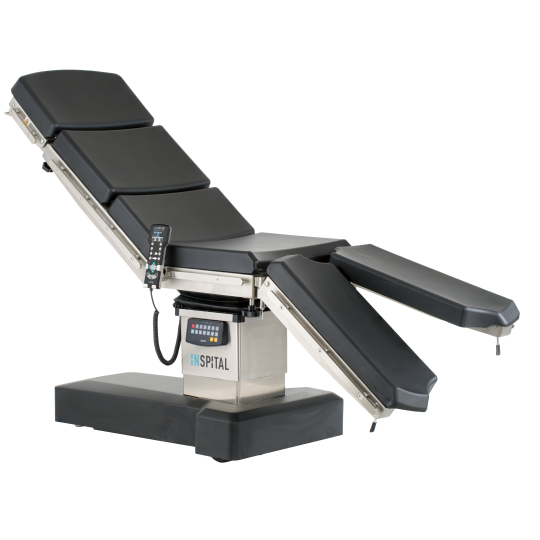
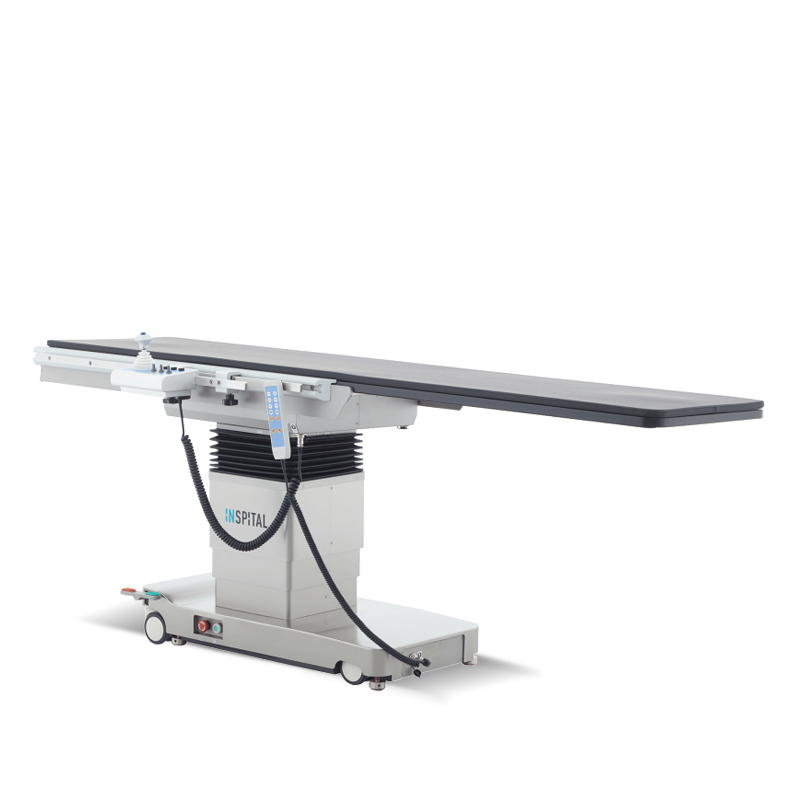
Mobile Carbon Fiber Operating Table for Imaging Procedures C-Arm Imaging Table OT80.30
Prices visible to registered customers only
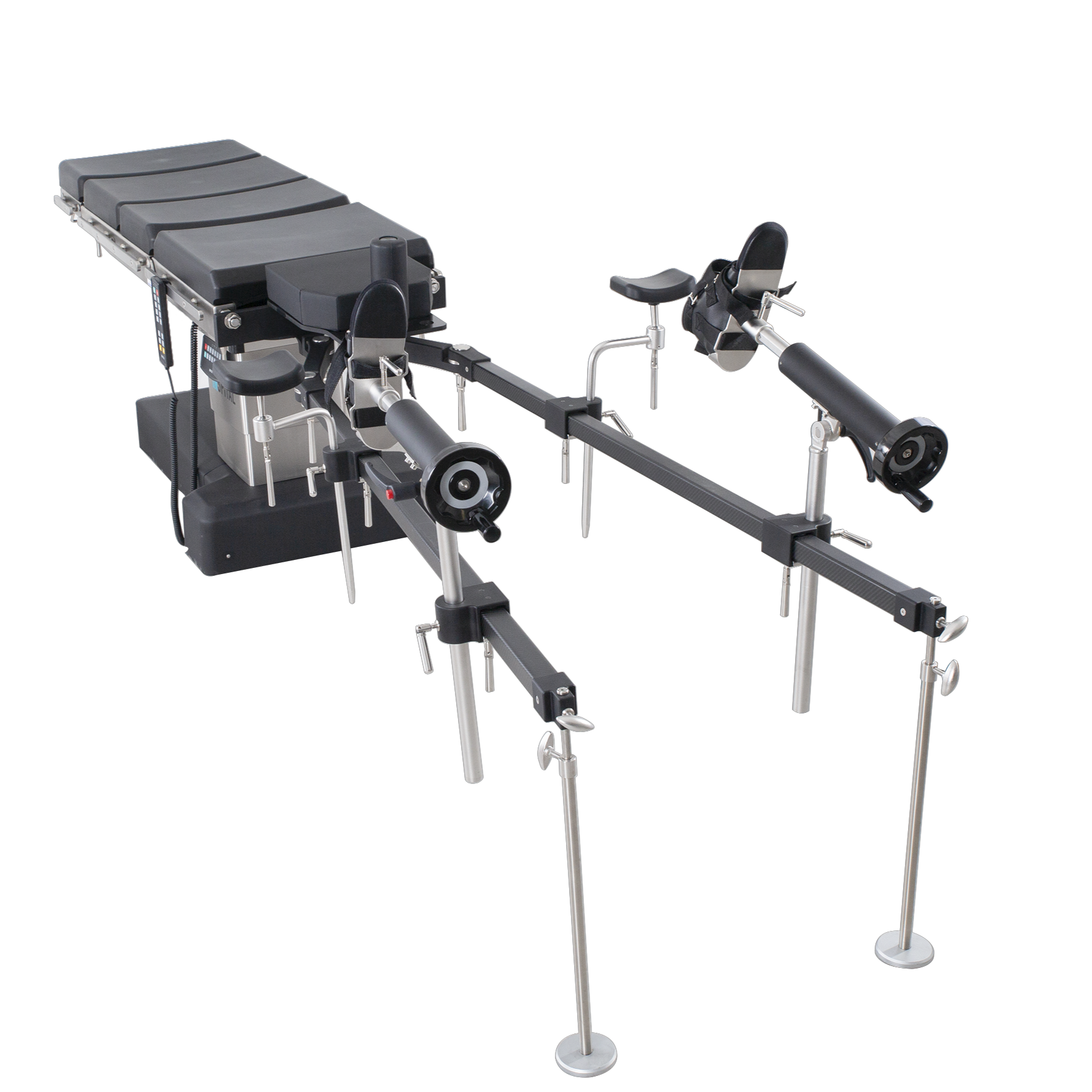
Traction Set (Carbon Fiber) OT60.95
Prices visible to registered customers only
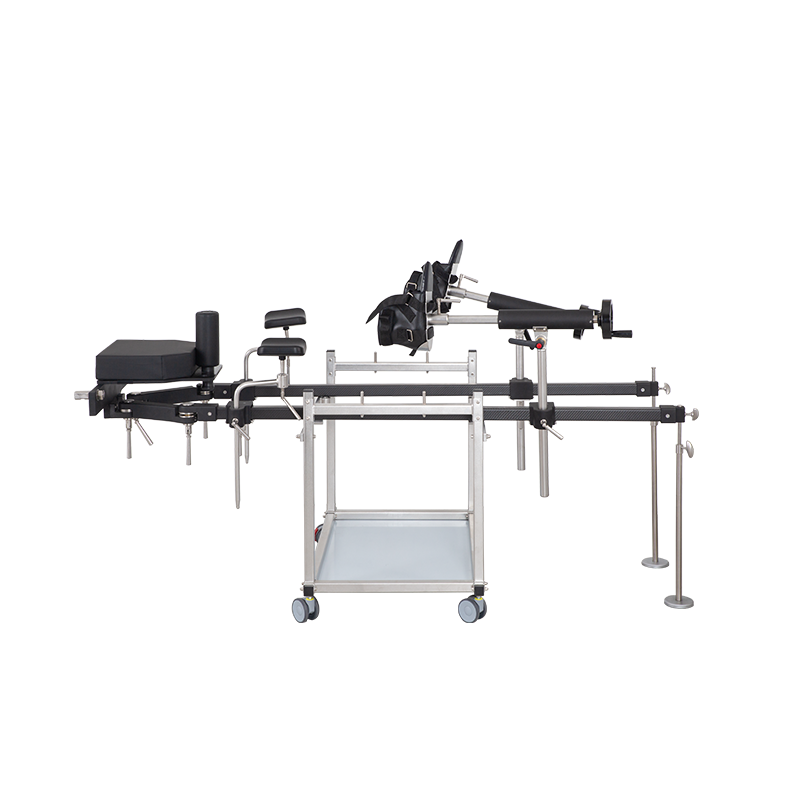
Carbon Fiber Traction Trolley OT60.96
Prices visible to registered customers only
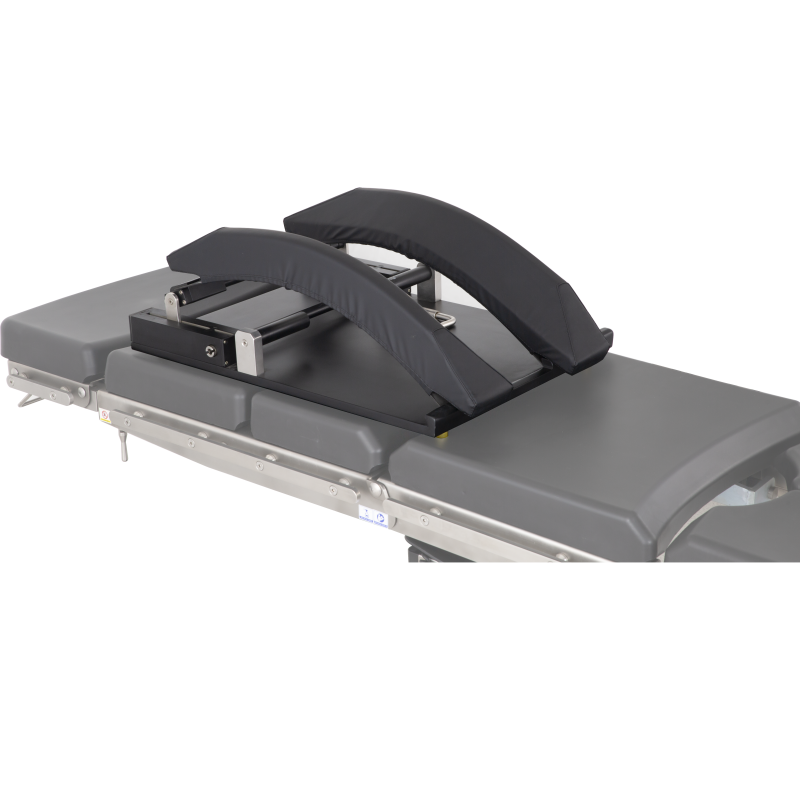
Radiolucent Spine Frame OT60.35
Prices visible to registered customers only
Innovation in the OR: The Carbon Table as Key Technology in Modern Surgery
The carbon table for the operating room has become an indispensable component of modern hospital and OR infrastructure in recent years. Particularly in combination with imaging procedures such as C-arm, angiography, or intraoperative CT diagnostics, an operating table with a carbon plate offers decisive advantages. The use of carbon—more precisely, carbon fiber-reinforced plastic—enables exceptional radiolucency while maintaining high stability. This results in fewer artifacts, which significantly improves image quality and increases the precision of surgical procedures.
A high-quality carbon operating table, as developed and offered by Inspital GmbH, combines these technological advantages with ergonomic functionality. The combination of a radiolucent table top, modular expandability, and reliable mechanical or electromechanical adjustment creates optimal conditions for a wide range of specialties—from orthopedics and traumatology to vascular surgery. A key advantage of carbon in the OR lies in its high strength at comparatively low weight. The material allows for a slim table top design without compromising load capacity. Especially during complex procedures requiring repeated intraoperative imaging, the continuous radiolucency ensures precise visualization of anatomical structures. This not only reduces the need for repositioning but also saves valuable OR time.
In addition to technical performance, hygiene capability also plays a central role. Carbon tables are typically designed with smooth, sealed surfaces that enable easy cleaning and disinfection. This supports compliance with strict hygiene requirements in daily clinical practice. Furthermore, the issue of cost-effectiveness is gaining increasing importance. A modern carbon operating table is a long-term investment in efficiency, safety, and quality. Its versatile applicability allows it to be used across different disciplines, optimizing utilization and offsetting investment costs.
Material Advantages of Carbon in Operating Tables: Stability Meets Radiolucency
The choice of the right material is of central importance in the development of an operating table. Carbon, or carbon fiber-reinforced plastic, offers properties that traditional materials such as stainless steel or aluminum cannot fulfill in the same way. A carbon operating table is characterized particularly by its high radiolucency, which is invaluable during image-guided procedures.
Compared to metallic components, carbon produces significantly fewer image artifacts. This means that surgical teams receive a clearer and more detailed visualization during the operation. Especially during minimally invasive procedures or the implantation of screws, plates, or prostheses, this precision is crucial. The continuous access for C-arm systems is additionally supported by the slim, stable design. Another advantage of carbon lies in its excellent weight-to-stability ratio. Despite its lightness, the material offers high load capacity. This allows safe positioning even for obese patients without the table construction appearing massive or unwieldy. At the same time, the lower weight facilitates installation and, if necessary, positioning of the table in the operating room.
Carbon also impresses in terms of longevity. The material is corrosion-resistant and insensitive to many chemical cleaning and disinfection agents. In an environment where strict hygiene regulations apply and surfaces must be intensively cleaned regularly, this represents a clear advantage. The smooth surfaces also reduce particle adhesion and facilitate reprocessing. The ergonomic added value should not be underestimated. A slim carbon table top enables better accessibility to the surgical field. Surgeons can work closer to the patient, which improves posture and reduces fatigue during long procedures. This indirectly contributes to treatment quality.
In summary, carbon as a material for operating tables offers a combination of stability, radiolucency, hygiene advantages, and ergonomic design. These properties make the carbon operating table a forward-looking solution for modern operating rooms where precision and efficiency are equally important.
Versatile Applications: The Carbon Operating Table in Different Specialties
A modern carbon operating table is no longer limited to a single specialty. Through its modular design and radiolucent table top, it is suitable for a wide range of surgical disciplines. Orthopedics and trauma surgery benefit particularly strongly, where intraoperative imaging plays a central role. During fracture treatment or spinal procedures, the radiolucent carbon plate enables precise control of implant positioning.
The carbon table also offers decisive advantages in vascular surgery and interventional radiology. During endovascular procedures, the image intensifier must frequently be moved along the body. Continuous radiolucency without interfering cross members or metal structures significantly facilitates these workflows. This not only increases image quality but also efficiency in the OR. In neurosurgery, precise patient positioning plays an essential role. Here, carbon tables score points through their fine adjustability and stability. Electric or hydraulic drive systems enable precise adjustments of height, tilt, and Trendelenburg position. At the same time, imaging remains free of interfering artifacts, which is particularly important during complex procedures on the skull or spine.
Furthermore, a carbon operating table is also suitable for hybrid operating rooms. In these highly modern environments, surgical and interventional procedures are combined. The integration of imaging systems requires a table solution that is both mechanically robust and completely radiolucent. Carbon fulfills these requirements ideally. Last but not least, general and visceral surgery also benefit from the advantages of such a table. Even when imaging is not permanently in use, the flexible positioning capability offers clear added value. Different positioning concepts can be individually implemented with appropriate accessories.
The versatility of a carbon operating table makes it a sustainable investment for hospitals and outpatient surgical centers. Through its broad applicability, it can cover multiple specialties and thus supports efficient use of existing infrastructure.
Ergonomics and Patient Safety: Central Aspects of Modern Operating Tables
In addition to technological properties such as radiolucency, ergonomics plays a crucial role in selecting a carbon operating table. A well-designed table system not only supports the surgical team but also contributes significantly to patient safety.
For OR personnel, flexible height adjustment is essential. Different body sizes and types of operations require individual adjustments. A modern carbon table enables stepless settings so that an ergonomically optimal working height can be achieved. This reduces physical strain and prevents long-term complaints in the back and shoulder area.
Lateral tilt as well as Trendelenburg and anti-Trendelenburg positions can also be precisely controlled. Especially during laparoscopic or vascular surgical procedures, these positions are crucial for good visibility of the surgical field. A stable construction ensures that maximum safety is guaranteed even at extreme tilt angles. For patients, safe positioning is paramount. High-quality carbon operating tables feature robust locking mechanisms and even weight distribution. In combination with special positioning aids, the risk of pressure sores or nerve damage is minimized. The smooth surface of the carbon plate also enables secure fixation of mattresses and accessories.
Another aspect is intuitive operability. Modern control units, often via hand control or foot switch, allow quick adjustments even during the procedure. This saves time and increases the team’s responsiveness. At the same time, integrated safety functions help prevent operating errors. Ergonomics and safety are closely linked. A well-designed table design supports smooth workflows, minimizes risks, and improves overall quality in the OR. The carbon operating table thus becomes not just a technical instrument but a central building block for efficient and safe surgical processes.
Carbon Operating Table: Integration into Existing OR Structures and Hybrid Concepts
The structural requirements for modern operating rooms have changed considerably in recent years. In addition to traditional surgery, hybrid OR concepts, image-guided procedures, and interdisciplinary use are gaining increasing importance. A carbon operating table must therefore not only convince as an isolated solution but integrate seamlessly into complex technical environments. This is precisely where the strategic relevance of a thoughtfully designed carbon operating table becomes apparent.
A central criterion is complete compatibility with imaging systems. Mobile C-arms, permanently installed angiography systems, or intraoperative CT scanners require sufficient freedom of movement and unrestricted radiolucency. A continuous carbon table top without interfering metal bracing enables large-area fluoroscopy and reduces artifacts to a minimum. This supports precise intraoperative image control—a decisive factor in complex procedures. In hybrid operating rooms, surgical and interventional procedures merge. Here, the operating table must be suitable for both open operations and minimally invasive, catheter-based procedures. A modularly designed carbon operating table offers ideal prerequisites for this. Interchangeable segments, extendable table tops, or specialized accessory solutions allow rapid adaptation to different indications. This flexibility increases OR utilization and supports efficient workflows.
A high-quality carbon table, as developed by Inspital GmbH, also takes into account ergonomic and logistical aspects of integration. Clear cable routing, stable base constructions, and a compact design facilitate the positioning of additional medical technology. Monitors, navigation systems, and anesthesia units can be optimally arranged without restricting the OR team’s freedom of movement. Static load capacity also plays an important role. Modern imaging systems are often large-dimensioned and place additional demands on spatial planning. The carbon operating table must therefore be not only radiolucent but also mechanically robust. A stable base ensures safety and precision even in complex positioning scenarios.
Carbon Operating Table: Hygiene, Maintenance, and Sustainability in Daily Clinical Practice
The operating room has the highest requirements for hygiene and material durability. Every component of the equipment must be designed to enable safe reprocessing and function reliably over the long term. A carbon operating table fulfills these criteria through its specific material properties and thoughtful construction.
Carbon surfaces are smooth, low-porosity, and resistant to common cleaning and disinfection agents. These properties significantly facilitate daily cleaning and support the consistent implementation of clinical hygiene standards. Since the table top is typically designed without open joints or hard-to-reach gaps, the risk of bacterial accumulation is reduced. This directly contributes to patient safety. In addition to surface characteristics, constructive design also plays an important role. A modern carbon operating table is designed so that mechanical and electrical components are protected yet easily accessible. Maintenance work can be performed efficiently without having to disassemble the entire table. This reduces downtime and increases availability in hospital operations.
Another advantage lies in carbon’s high corrosion resistance. Unlike certain metal components, the material does not react sensitively to moisture or chemical influences. Especially in an environment where liquids and disinfection solutions are regularly used, this durability is a clear advantage.
The carbon operating table also gains importance from a sustainability perspective. The material’s longevity ensures that the system can be reliably used for many years. A robust design reduces the need for frequent replacement purchases and thus contributes to a resource-conserving investment strategy. Furthermore, a modular construction enables targeted replacement of individual components instead of replacing the entire system.
A high-quality carbon table, as offered by Inspital GmbH, combines these aspects in a holistic concept. Hygiene, ease of maintenance, and sustainability are not viewed in isolation but understood as integral components of a modern OR solution. This creates a system that meets both medical and economic requirements over the long term.
Future Perspectives: The Carbon Operating Table as Foundation for Digital Surgery
Surgical practice is in continuous evolution. Digital assistance systems, robot-assisted procedures, and high-resolution imaging technologies are fundamentally changing the requirements for technical equipment in the operating room. In this context, the carbon operating table assumes a key role as a stable, radiolucent, and technologically compatible platform.
One of the most important prerequisites for digital surgery is interference-free imaging. Navigation systems and intraoperative 3D scans rely on clear, artifact-free visualizations. Carbon’s radiolucency minimizes interference and supports precise visualization of anatomical structures. This forms the foundation for exact implant placement and minimally invasive techniques. Stability of the operating table is also of central importance in robot-assisted surgery. Robotic arms work with high precision and require a reliable, vibration-free base. A high-quality carbon operating table provides the necessary rigidity and positional accuracy to meet these requirements. At the same time, flexible adjustability enables optimal patient positioning for different robotic systems.
The increasing networking of medical devices opens up additional perspectives. In the future, operating tables could be more strongly integrated into digital control platforms. Predefined positioning programs, automatic position adjustments, or integration into OR management systems are conceivable developments. A technologically advanced table system creates the structural prerequisites for such innovations.
Furthermore, interdisciplinarity plays an increasingly important role. Operating rooms are increasingly used by different specialties that bring different requirements. A versatile carbon operating table can cover this diversity and thus supports flexible usage concepts in hospitals and outpatient centers.