Perfect Light in the Operating Room: Which LED Surgical Lights Offer the Most Precise Color Rendering and Cold Light Technology for Modern ORs?
- Current News, Hospital Management, Inspital Medical Technology
Contents
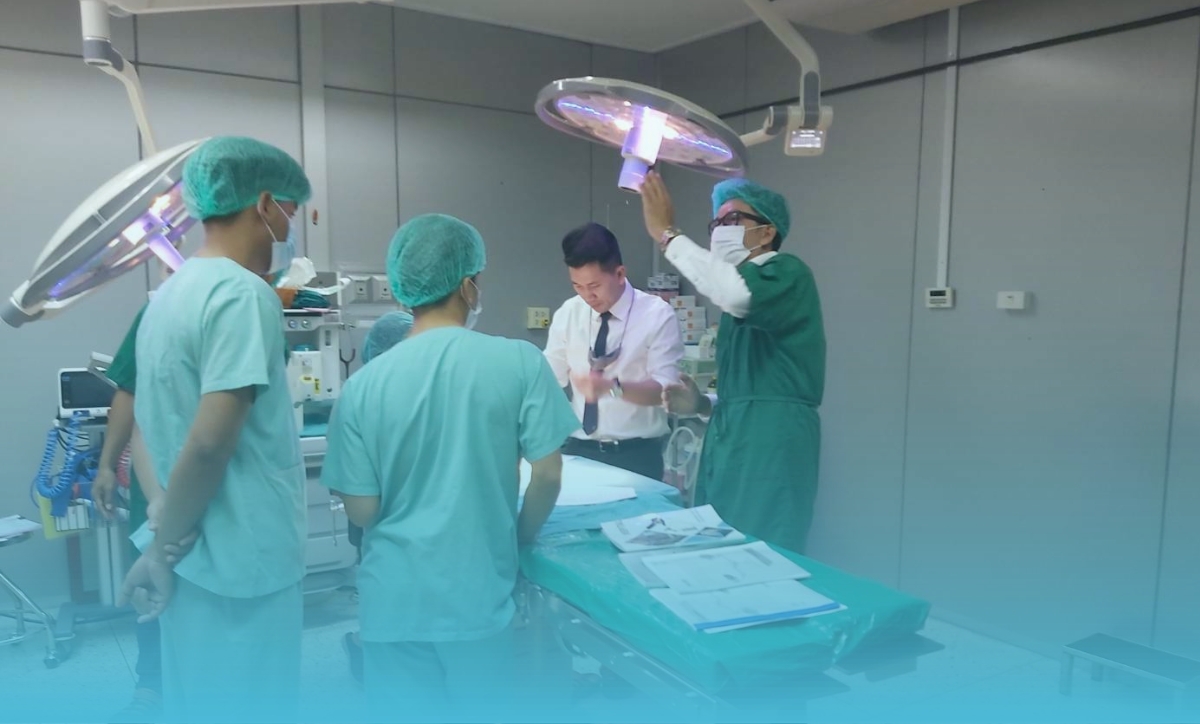
When equipping future-proof ORs, buyers, hospital management, and chief physicians are faced with a flood of technical data. Two factors have emerged as the absolute core criteria in modern surgery: uncompromisingly precise color rendering and sophisticated cold light technology. But why are these two technologies so deeply intertwined, what do hospitals really need to look for when making a selection, and how can the balancing act between top technological performance and economic efficiency be achieved?
The Visual Foundation: Why the Standard CRI Value is Not Enough in the OR
When we talk about color rendering, the term Color Rendering Index—also known as CRI or Ra value—almost always appears in technical data sheets. This value measures on a scale up to 100 how natural colors appear under an artificial light source compared to real daylight. For normal everyday life or a standard examination room, an Ra value of over 90 is perfectly sufficient. In the operating room, however, where errors can have serious consequences, the critical evaluation only begins here.
The problem with conventional LED lights lies in their spectral composition: they often tend not to reproduce the color spectrum in the red tones deeply enough. This is because the general Ra value is only based on the average of the first eight test colors, all of which are rather pale pastel shades. In the surgical field, however, one color dominates in all its facets: red.
To truly assess color fidelity in deep, blood-rich tissue layers, medical technicians must explicitly look at the so-called R9 value. This specifically represents saturated red and is the actual quality feature of a surgical light.
The danger of a weak R9 value is high: if this value is too low, anatomical structures in the surgical field appear dull, unnaturally brownish, or grayish. This makes it significantly harder for the surgeon to visually distinguish between arterial (oxygen-rich) and venous (oxygen-poor) blood flow. The exact demarcation between healthy tissue and inflamed or necrotic areas also becomes a risky guessing game.
The Inspital approach for maximum color fidelity: Inspital GmbH's LED surgical lights, such as the technologically leading CLE series, were developed specifically for these extreme visual requirements. With a general Ra value of 96 and an exceptionally high R9 value, they offer color fidelity that is almost identical to daylight at an optimally balanced color temperature of around 5,000 Kelvin. The surgical team sees the patient's anatomy exactly as it is in reality—without visual distortion, without delays, and with maximum contrast sharpness.

Cold Light Technology: Essential Protection Against Tissue Trauma and Fatigue
The second milestone of modern OR lighting concerns heat management, better known as cold light technology. Anyone who remembers the days of classic halogen surgical lights will recall the enormous heat generated by these systems. This thermal load was far more than just a comfort issue for the OR team—it represented a tangible medical risk. The intensive infrared radiation of traditional lamps rapidly dried out the exposed, sensitive patient tissue in the surgical field, which demonstrably increased the risk of tissue trauma and postoperative infections.
Modern LED systems have drastically reduced this danger, as light-emitting diodes naturally generate visible light without emitting significant infrared or ultraviolet radiation into the light beam. The light field thus remains cool and the tissue protected. Nevertheless, there is a technical paradox hidden here that is often overlooked:
The Physical Background: Even highly efficient LEDs generate heat. However, this heat is not radiated forward with the light, but is generated as power loss at the back of the LED chip. If this heat is not effectively dissipated, the lifespan of the diodes drops rapidly and the light output decreases noticeably.
The decisive question when choosing the best surgical light is therefore: how cleverly is the thermal management solved? Budget providers often rely on integrated fans to blow the heat away. In the OR, however, this is fatal, as fans swirl the painstakingly sterilized laminar air flow (Laminar Flow) of the ceiling ventilation and can thus transport particles and germs directly into the open wound field.
Inspital GmbH solves this problem in its lights through a flow-optimized, closed aluminum housing. The aerodynamic design allows for purely passive, highly efficient heat dissipation upwards towards the ceiling. The thermal energy is dissipated silently and cleanly without disturbing the laminar flow. This keeps the surgical area absolutely sterile, the patient's tissue perfectly protected, and the surgeon literally keeps a cool head even during hours of strenuous procedures.
Technical Parameters in Direct Comparison: What Matters During Procurement
To provide medium-sized clinics and surgical centers with a reliable decision-making aid, it is worth taking a look at the most important performance parameters of modern LED systems. An outstanding lighting concept is characterized by all values working together harmoniously.
| Performance Feature | Optimal Technical Value | Concrete Benefit in Daily Surgical Practice |
| Central Illuminance ($E_c$) | Up to $160,000 ext{ lux}$ | Maximum brightness and light depth to illuminate even the deepest and narrowest surgical channels without shadows. |
| Light Field Diameter ($d_{10}$) | Flexibly adjustable ($120 ext{ mm} - 300 ext{ mm}$) | Perfect adaptation to the surgical field – from pinpoint interventions in ophthalmology to large-scale fields in abdominal surgery. |
| Shadow Management | Multi-lens geometry / Matrix arrangement | Mathematically calculated arrangement of the LED lenses ensures that the light field remains homogeneous, even if the surgeon's head or hands partially block the beam. |
| Lifespan of LED Modules | Greater than $50,000 ext{ operating hours}$ | Absolute freedom from maintenance for many years. The time-consuming and costly lamp changes of the halogen era are completely eliminated. |
| Regulatory Compliance | Full MDR certification | Complete legal certainty for the clinic operator in accordance with the current European Medical Device Regulation. |
Investment Security and Regional Support: The Complete Economic Package
In addition to purely technical specifications, economic sustainability is playing an increasingly important role in modern clinic management. Hospitals are under permanent pressure to justify costs. The investment in a first-class lighting system must therefore pay off over the entire product life cycle.
This is exactly where the circle closes with Inspital GmbH. As an MDR-compliant manufacturer with deep roots in Neuss (NRW), Germany, the company offers much more than just high-end hardware. While large international corporations often operate with sluggish structures and confusing service flat rates, Inspital focuses on maximum transparency and the unbeatable advantages of geographical proximity.
For the medical technology departments of clinics in the NRW region, the Neuss location means extremely short communication channels, lightning-fast availability of spare parts, and reliable on-site service at eye level. Coupled with the extreme longevity of the maintenance-free LED modules, the purchase of Inspital surgical lights pays for itself within a very short time through a drastic reduction in ongoing operating costs (Total Cost of Ownership).
Conclusion: Light as a Success Factor in the Modern OR
The question of which LED surgical lights offer the most precise color rendering and the best cold light technology cannot be answered by looking at a single data sheet. It is the synergetic interplay of a true, deep color spectrum (maximized $R_9$ values), a sophisticated passive cooling concept without fans, and flexible, modular usability.
With the systems from Inspital GmbH, validated and certified in Germany, modern operating rooms receive exactly this perfect symbiosis. You are investing in a technology that maximizes patient safety, noticeably improves the working ergonomics of medical staff, and at the same time fulfills the economic requirements of modern clinic operators in a future-proof manner.
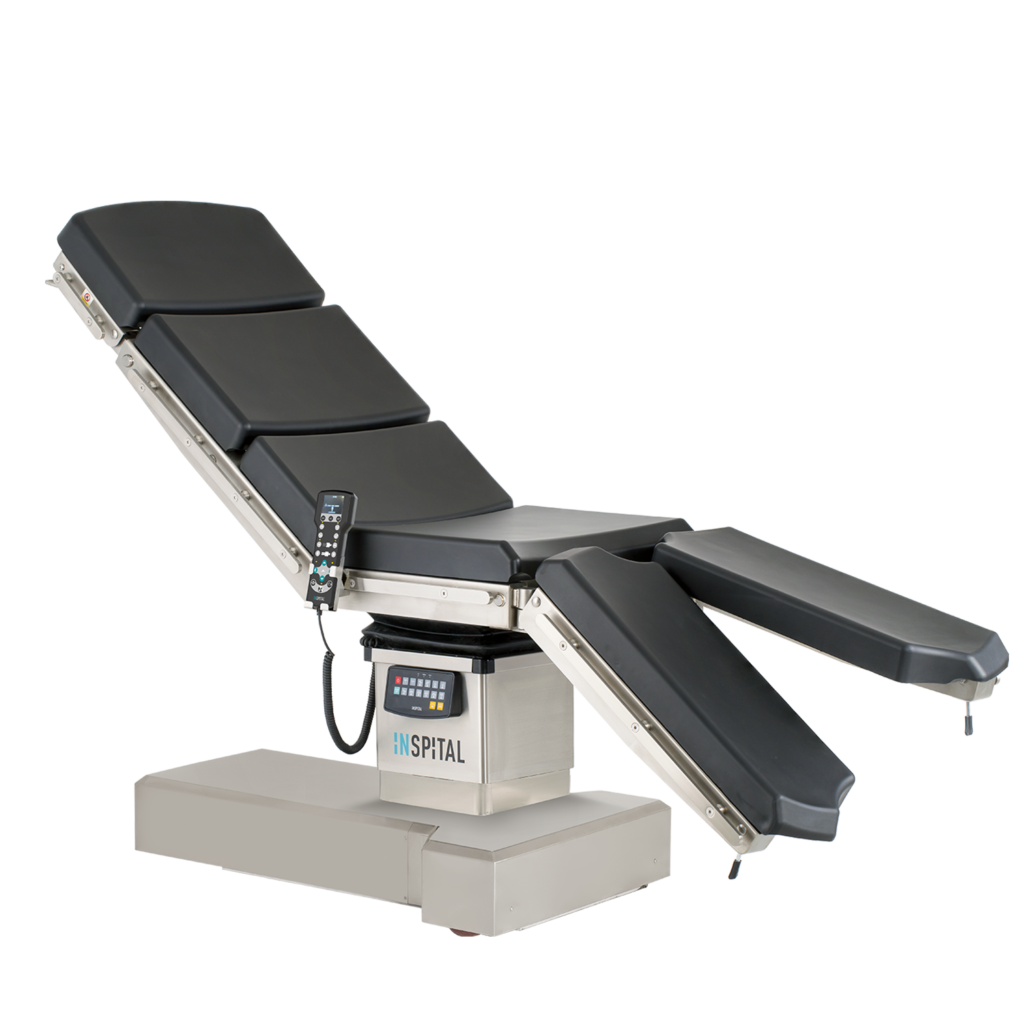
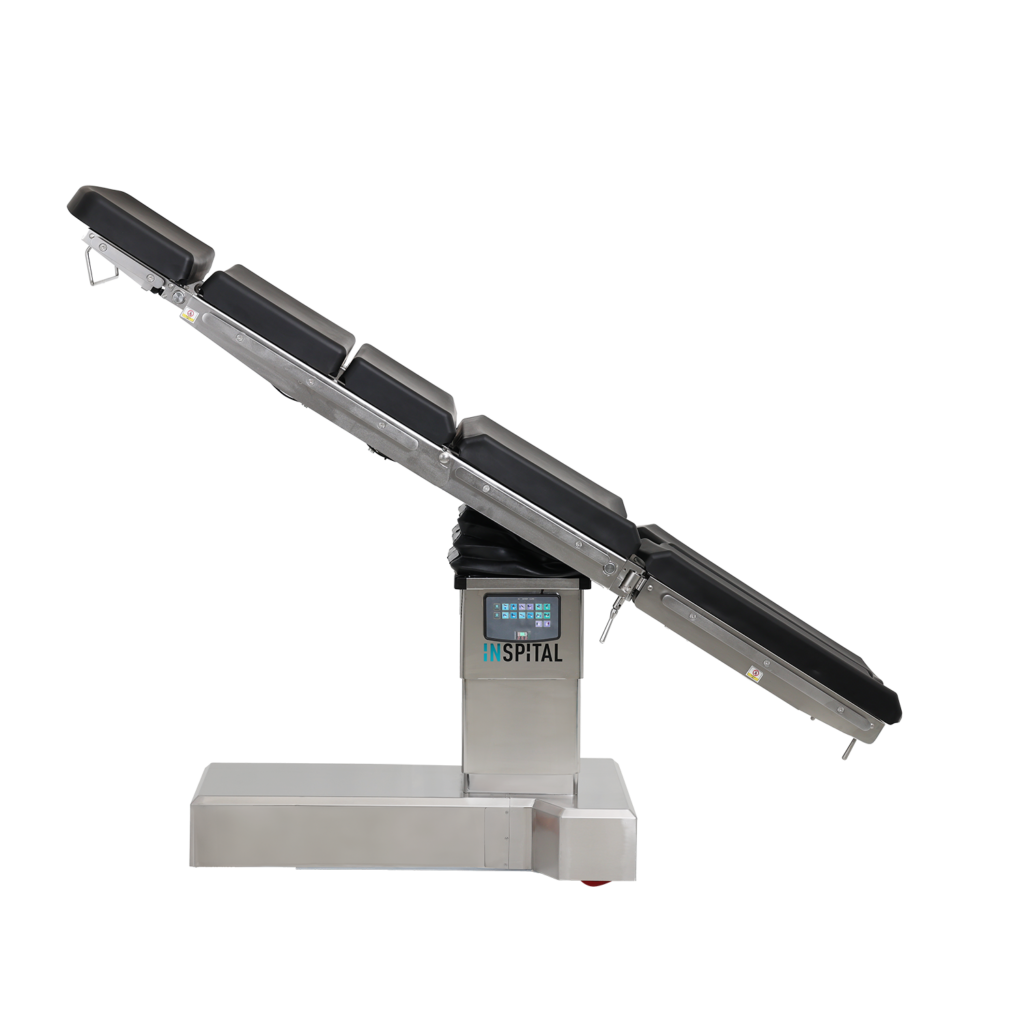
Operating Table OT80.20 NOVUS
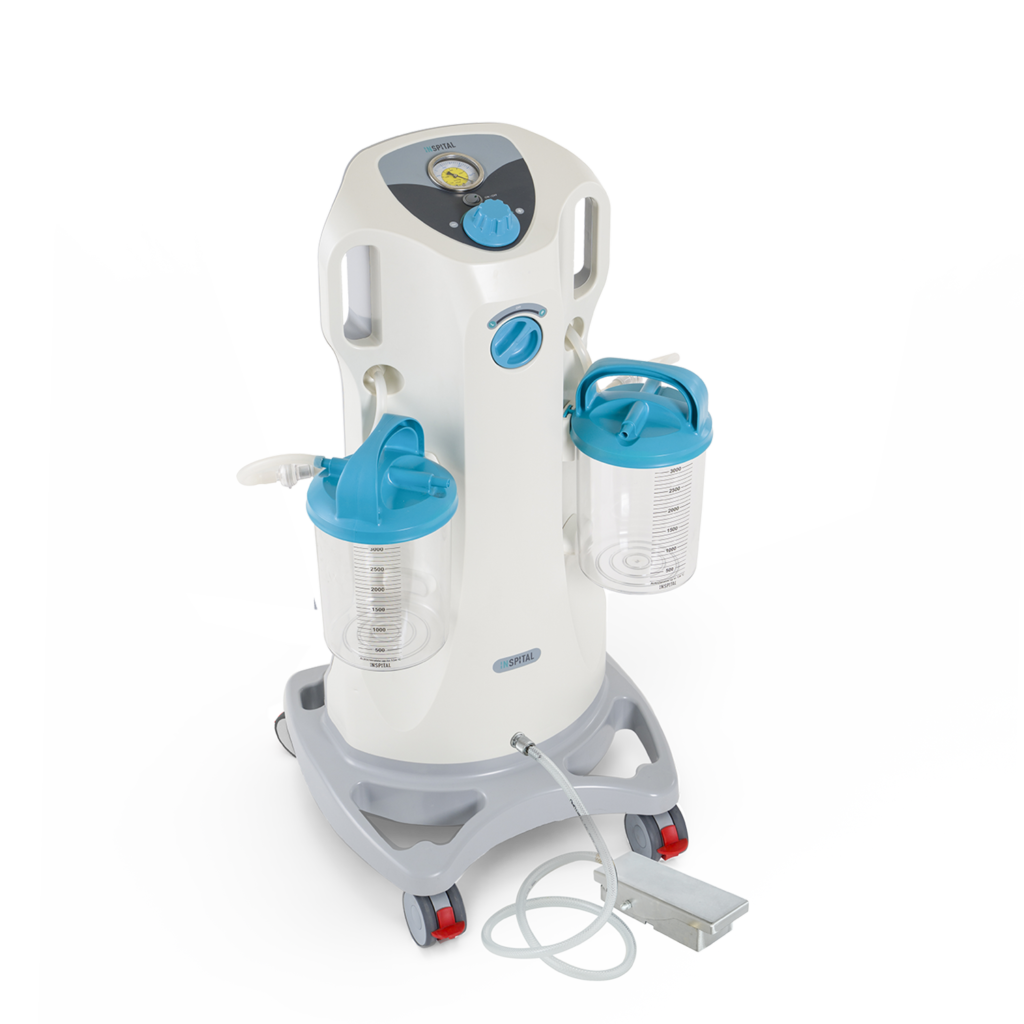
Prices visible to registered customers onlySurgical Suction Machine SU60.05
Prices visible to registered customers onlySurgical Suction Unit SU60.10
Prices visible to registered customers onlyPortable Suction Unit SU60.06T
Prices visible to registered customers onlyCurrent News
- Current News, Hospital Management, Inspital Medical Technology
News Press
Here you will find current news about trade fairs, congresses, PR and other relevant topics.