


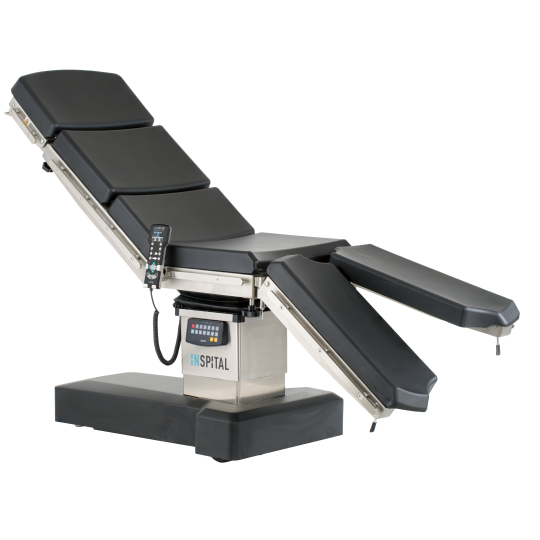
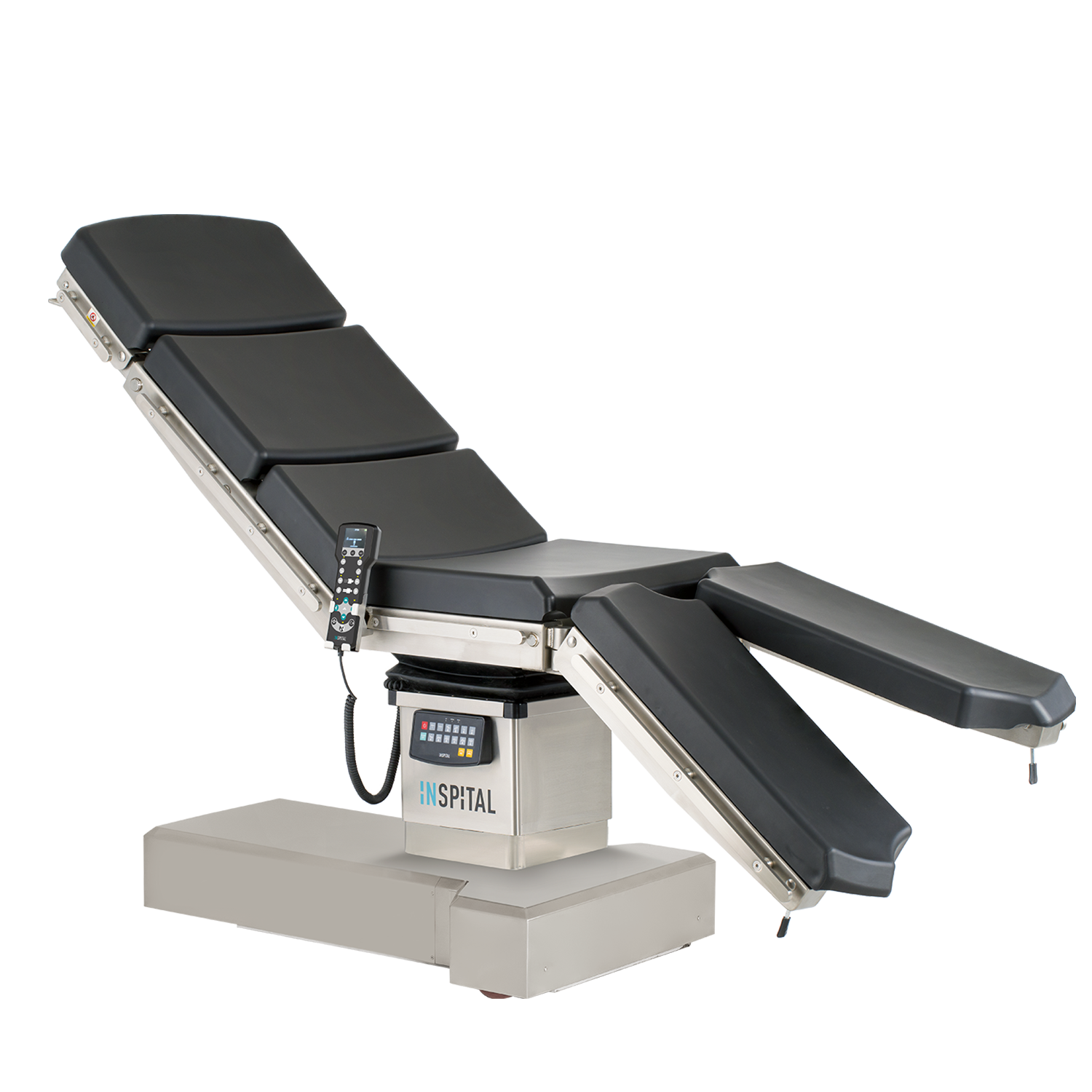
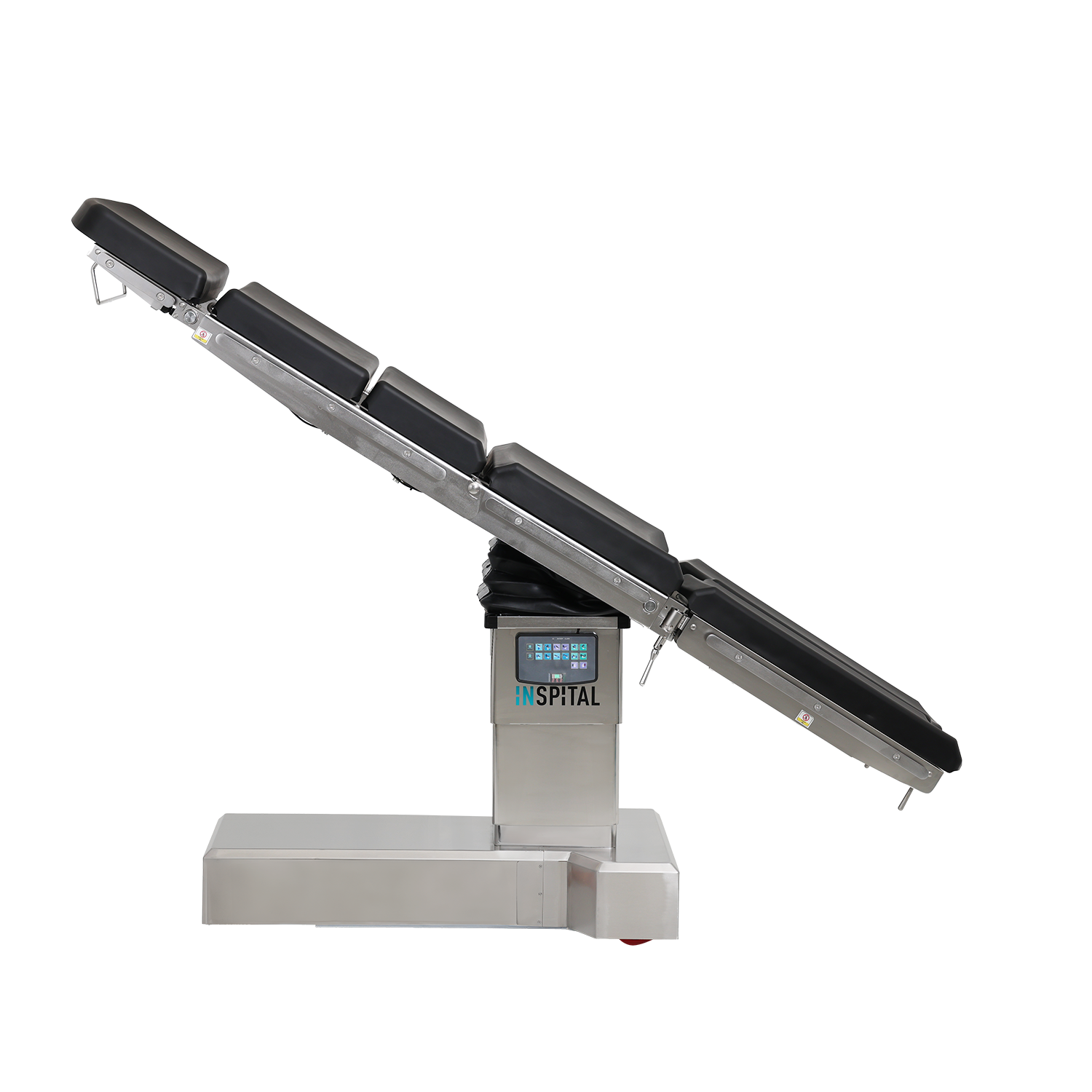
Operating Table OT80.20 NOVUS
Prices visible to registered customers only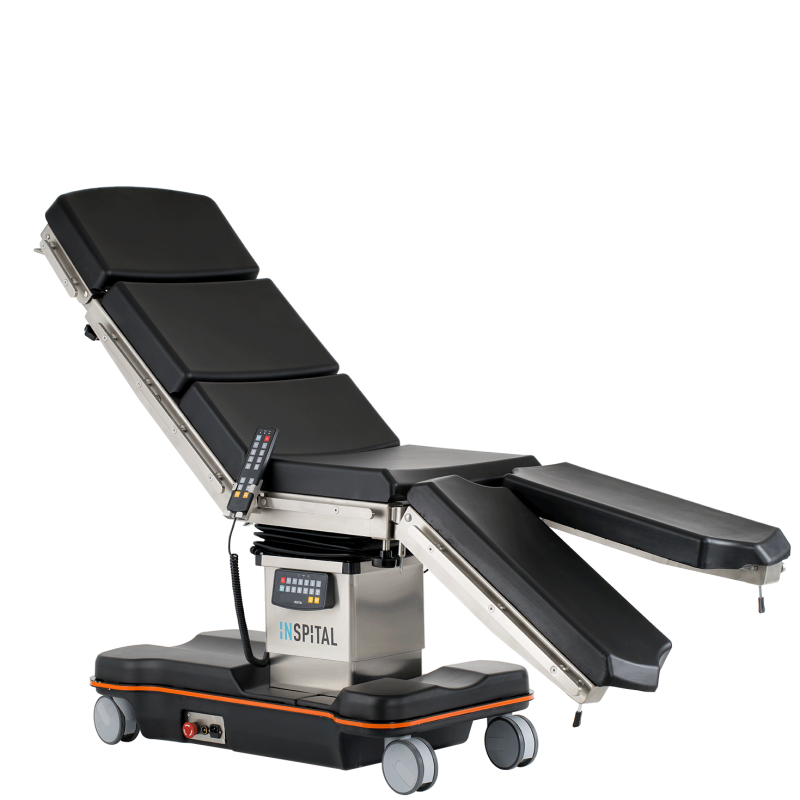
Operating Table OT80.25
Prices visible to registered customers only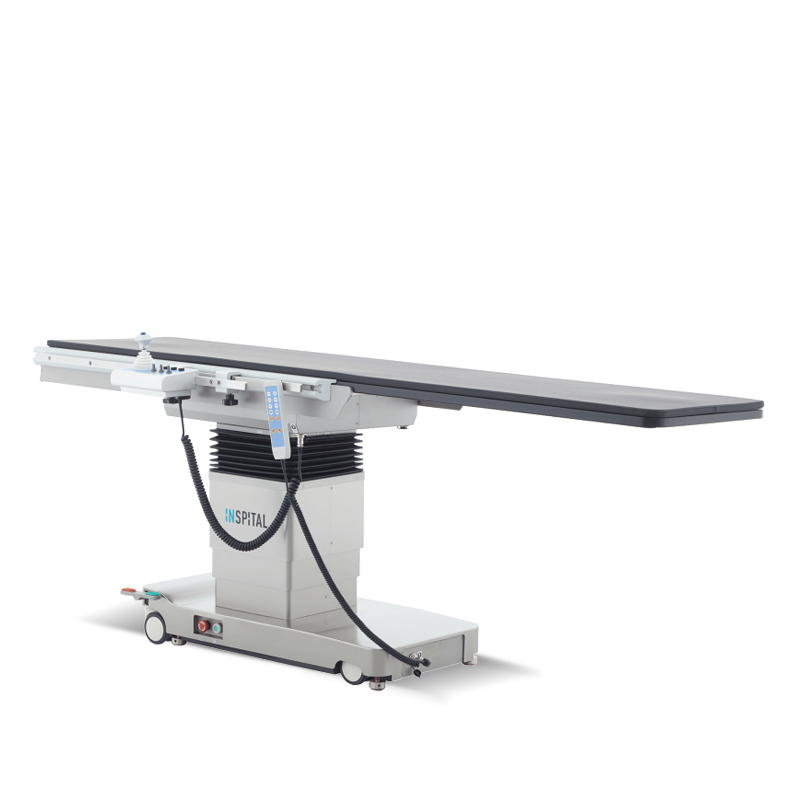
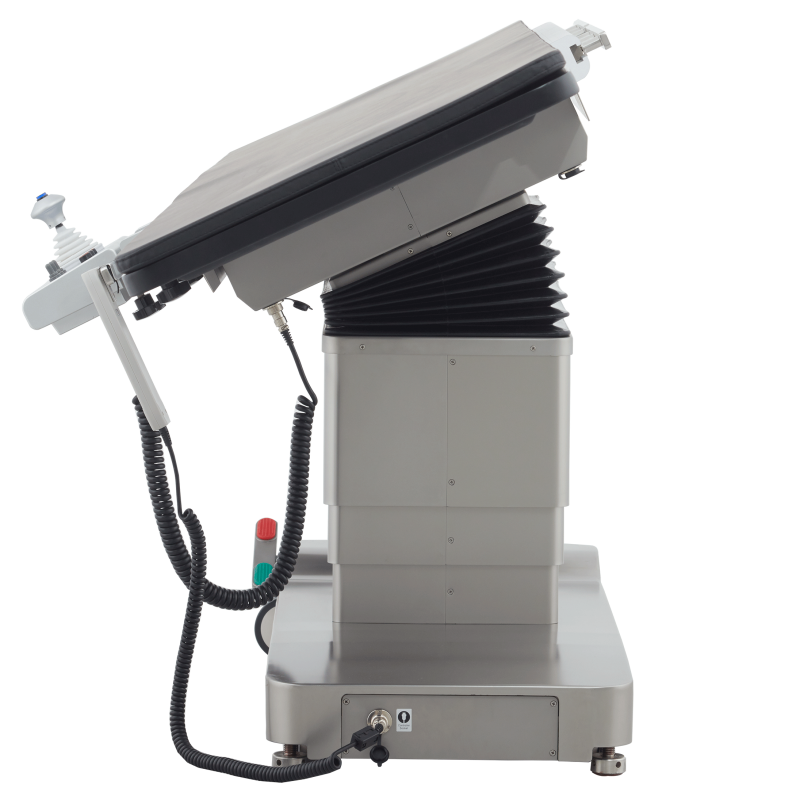
Mobile Carbon Fiber Operating Table for Imaging Procedures C-Arm Imaging Table OT80.30
Prices visible to registered customers only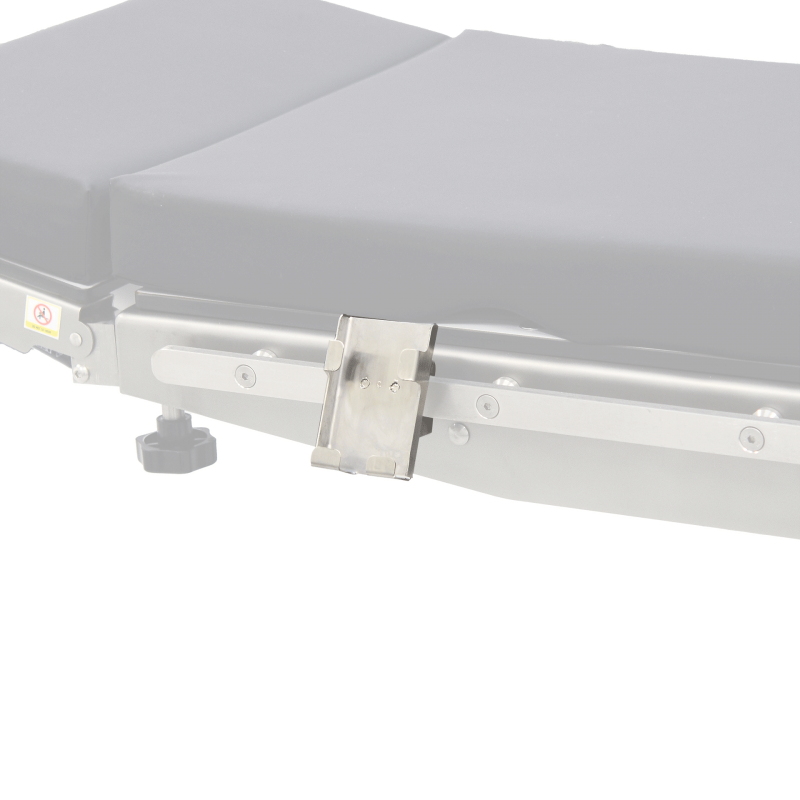
Support for Hand Control Unit OT60.29
Prices visible to registered customers only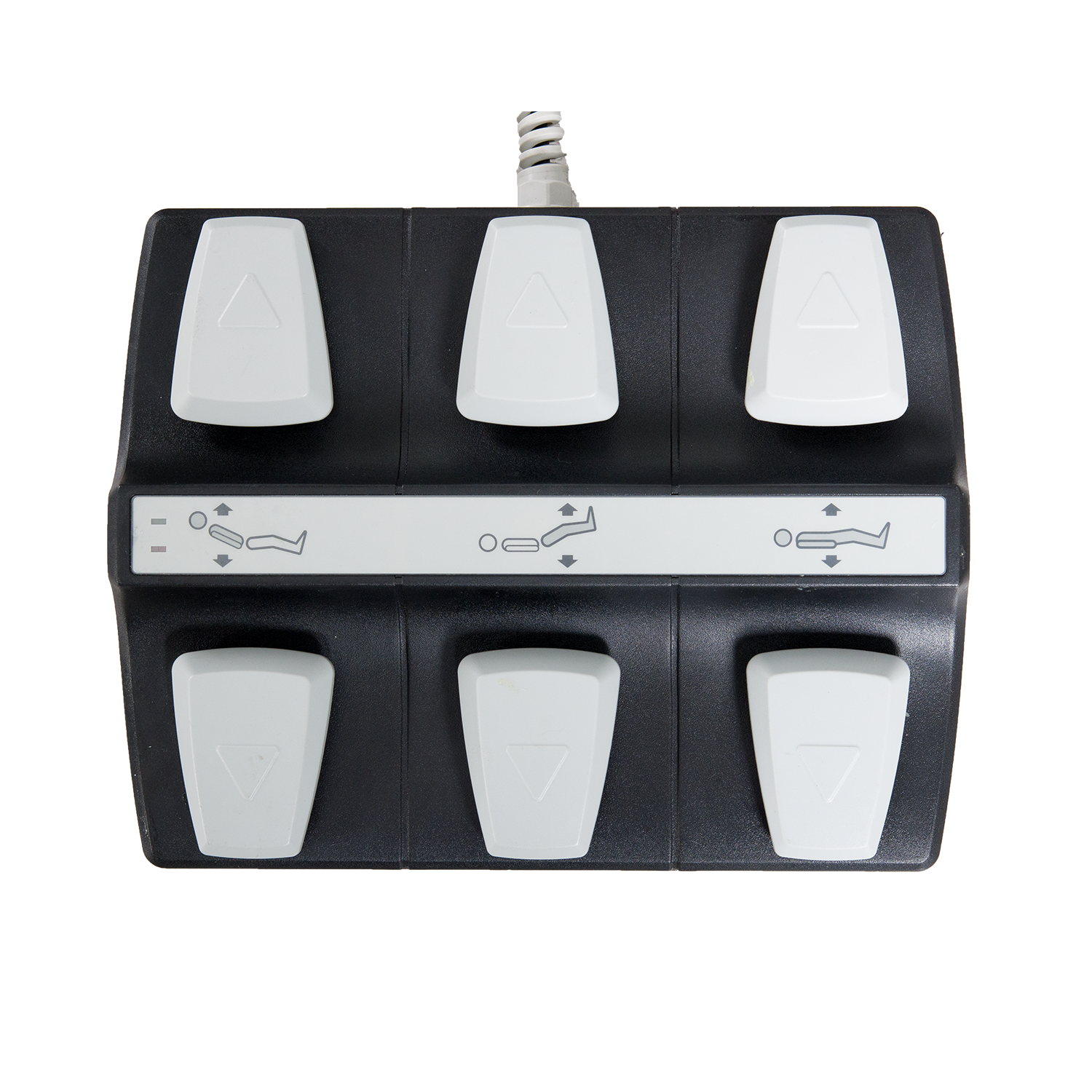
Foot Pedal OT60.28
Prices visible to registered customers only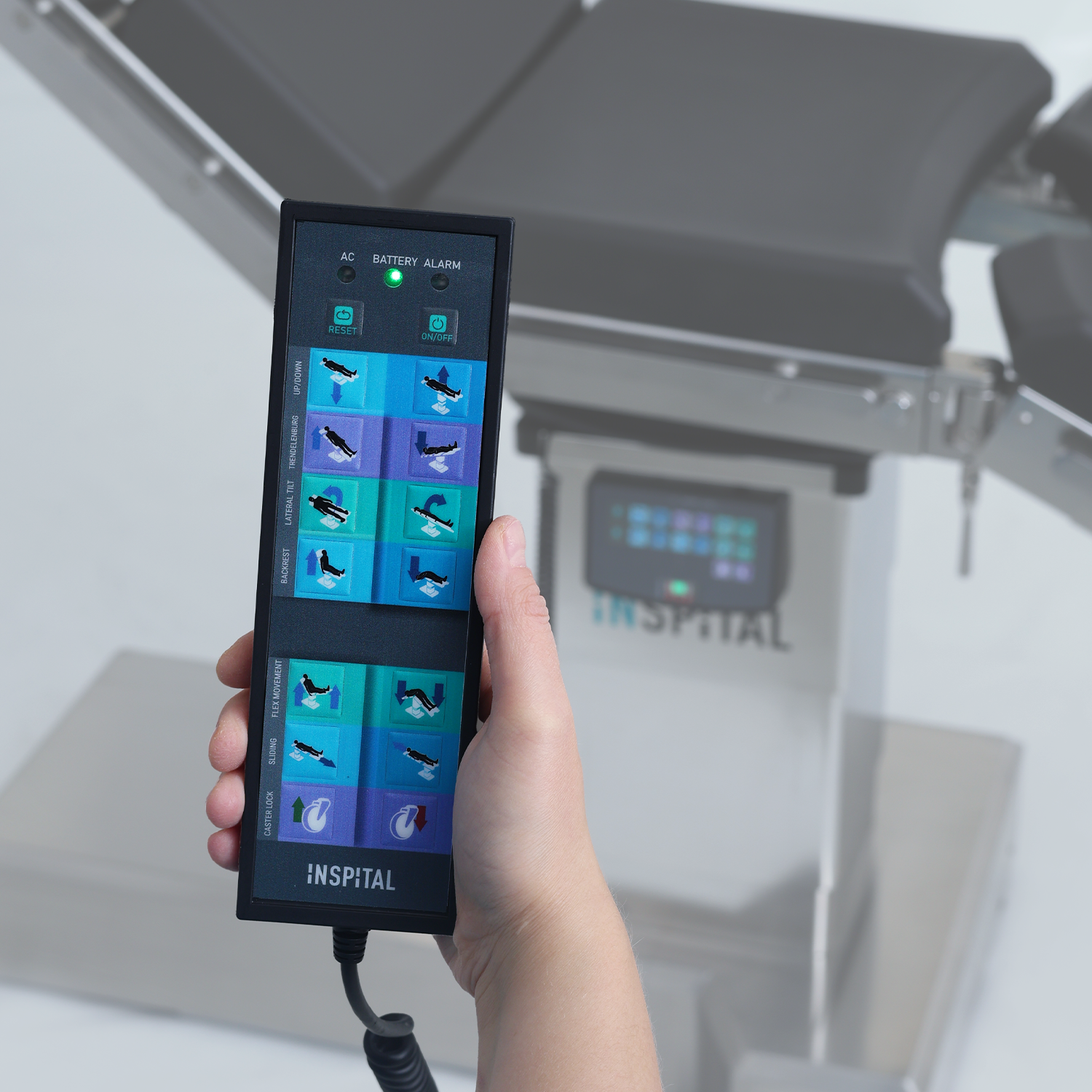
Hand control OT60.27
Prices visible to registered customers onlyOperating Table Control – Efficiency and Safety in the Modern Operating Room
Operating table control plays a central role in optimizing workflows in the operating room. In a modern medical environment, it is crucial that the operating table is intuitively controllable, reliable, and precise. Inspital GmbH offers innovative solutions specifically tailored to the needs of surgeons, nursing staff, and technicians. An intelligent operating table control system allows for rapid adjustment of the table position—both electrically and via programmed presets. This saves time, reduces the physical strain on staff, and increases patient safety. Especially during complex procedures where positioning must be changed several times, the value of a high-quality control system becomes clear: it ensures exact movement, quiet operation, and intuitive usability.
Another advantage of modern control systems is connectivity. Digital interfaces allow operating table controls to be connected to other devices in the OR, such as lighting, monitors, or X-ray positioning aids. Communication between systems ensures smooth processes and promotes holistic control of the surgical space. Furthermore, hygiene is the top priority in the OR. The user interfaces of modern controls are resistant to disinfectants and easy to clean. Touchpads or remote controls with waterproof surfaces minimize germ transmission and facilitate cleaning between procedures.
For hospitals, surgical centers, and medical facilities, it is not just the technical equipment of the tables themselves that counts, but above all the control system that makes them flexible and safe. Inspital GmbH provides support with customized solutions—from standard controls to fully integrated systems for digital operating rooms.
Advantages of Intelligent Operating Table Control for Surgical Processes
In surgery, every second counts—for both the team and the patients. An intelligent operating table control system therefore ensures significantly improved work processes and a smoother flow in the operating room. Inspital GmbH relies on systems that “think ahead,” adapt to different requirements, and simultaneously meet the highest safety standards.
A key advantage of intelligent control systems is the ability to individually program table positions. Surgeons can save frequently required positions, such as Trendelenburg or supine, as presets. This eliminates the need for manual adjustments multiple times during the procedure—saving time and keeping the team focused. Furthermore, modern controls can be integrated into digital OR infrastructures. This means that data on movements, positioning, and settings can be stored and quickly retrieved when needed. This data support is valuable for quality control, training purposes, or postoperative evaluations.
Another plus point is ergonomic operation. Intuitive interfaces, remote controls, or even foot switches ensure that the sterile work area is not compromised. This maintains hygiene—a fundamental factor in all surgical procedures. Operating table controls from Inspital GmbH are also designed for durability and reliable continuous operation. They feature robust mechanics, smart safety functions such as obstacle detection and emergency sensors, and energy-efficient operation. This can make all the difference, especially in large clinics or surgical centers with high throughput.
Overall, intelligent controls contribute significantly to increasing efficiency, minimizing risk, and reducing the workload in daily surgical routines. For clinics, surgical teams, and patients, this means more focus on what matters most: the successful performance of operations.
What Defines a High-Quality Operating Table Control? Quality Criteria at a Glance
Selecting the right operating table control is crucial for functionality, safety, and user-friendliness. A high-quality control system combines technical precision with ergonomic operation—a central focus for Inspital GmbH, which brings years of experience in medical technology solutions.
A central quality criterion is the precision of the control. Even minimal positioning errors can influence the surgical outcome. Therefore, finely adjustable movement sequences and exact angle adjustments are essential features of a professional control system. The electric drives must function smoothly, without jerking, and reliably—regardless of the load or surgical situation. Another point is functionality for everyday OR use: intuitively operated touch panels, remote control options, and programmable presets facilitate daily use and reduce operating errors. Additionally, the control should be seamlessly integrable into the digital OR workflow to enable data transfer to OR management systems or visualization devices.
Safety features are also critical. These include automatic obstacle detection, emergency stop functions, reset mechanisms in case of power failure, and built-in error diagnostics. These features minimize risks and increase the team’s confidence. Hygiene aspects also play a decisive role. Since operating table controls must be disinfected regularly, smooth, resistant surfaces and fewer gaps are important. Robust materials that are chemically resistant and easy to clean contribute to infection prophylaxis.
Last but not least, serviceability and maintainability are included in the evaluation. An easily accessible control with a modular design simplifies repairs, software updates, and training for medical staff. Quality pays off for both patients and facilities. Inspital GmbH offers control systems that meet all these criteria—for more safety, comfort, and efficiency in the OR.
Electric vs. Mechanical Operating Table Control – A Comparison
When choosing an operating table control, clinics face the decision between mechanical and electric systems. Both variants have their advantages and disadvantages, which affect ease of use, efficiency, safety, and integration into modern OR workflows. Inspital GmbH offers solutions tailored to the specific needs of facilities.
Mechanical controls operate via levers, handwheels, or simple switches. They are robust, low-maintenance, and usually more cost-effective to purchase. In smaller ORs or training centers where frequent position changes are rare, mechanical tables fulfill their purpose reliably. However, a disadvantage lies in the physical strain on staff: longer procedures or frequent adjustments can be exhausting and time-consuming. Furthermore, mechanical systems often lack interfaces to digital OR workflows.
Electric operating table controls, on the other hand, allow for precise and repeatable positioning at the touch of a button. Programmable presets for supine, Trendelenburg, or lateral positions save valuable time and reduce the risk of operating errors. Movements are smooth, steady, and independent of the load. This physically relieves the staff and ensures a smooth process in the OR.
Furthermore, electric systems can be integrated into digital OR infrastructures. Table movements can be documented, movement data stored, and analyzed if necessary—an advantage for quality assurance, training, and postoperative evaluations. Modern controls feature safety functions such as obstacle detection, emergency stop, or automatic reset in case of power failure, which significantly increase patient safety.
In summary: Mechanical systems are suitable for simple applications, while electric controls are the more efficient, safer, and future-oriented choice in modern operating rooms with high throughput and complex procedures. Inspital GmbH supports clinics in implementing the right solution for their requirements.
Integration of Operating Table Controls into Digital OR Systems
Digitalization is revolutionizing the operating room. Modern operating table controls are no longer isolated devices but an integral part of the digital infrastructure. Inspital GmbH develops systems that are flexible, networked, and easy to operate. Through networking with OR information systems, imaging, or navigation, positioning data can be recorded and stored. This enables precise documentation and facilitates quality control and training. OR teams benefit from synchronized processes: lighting, monitors, imaging, and table movements can be controlled simultaneously via networked interfaces. This saves time and reduces the risk of operating errors.
An important advantage is real-time diagnostics. Sensors continuously monitor mechanical loads, movements, and electrical states. Potential problems are identified early before they affect OR operations. This enables predictive maintenance, minimizes unplanned downtime, and increases the safety of patients and the team.
Hygiene also remains a central factor. Modern controls feature waterproof touch panels or remote controls that can be disinfected. Smooth surfaces and minimal gaps prevent germ accumulation and facilitate cleaning between operations. Furthermore, open interfaces allow integration into various software landscapes, including digital OR planning, visualization systems, or documentation software. In this way, the operating table becomes a fully networked element of the surgical workflow, significantly increasing efficiency, safety, and quality.
In summary, modern operating table controls not only facilitate positioning but actively contribute to the optimization of processes, documentation, and patient safety. Inspital GmbH focuses on intelligent systems that meet the requirements of digital operating rooms.
How Operating Table Controls Increase Patient Safety
Patient safety is the top priority in the operating room. A modern operating table control system contributes significantly to minimizing risks and increasing efficiency. Inspital GmbH develops systems that are both precise and safe.
Exact positioning is crucial. Inaccurate table movements can influence the surgical outcome or endanger patients. Electric controls enable controlled, repeatable movements that support surgical precision. Programmable presets for common surgical positions prevent manual errors and save valuable time.
Safety functions such as obstacle detection, emergency stop, and reset in case of power failure increase protection. Obstacle detection stops movements immediately as soon as resistance is registered—whether from OR equipment, body parts, or other obstacles. Emergency stop mechanisms allow for an immediate response in critical situations. Ergonomics and ease of use also contribute indirectly to safety. Operation via remote control, foot switches, or touch panels reduces fatigue, errors, and the strain on OR staff. This keeps the team focused, which in turn increases patient safety. Hygiene is another safety aspect: control surfaces are waterproof, disinfectable, and easy to clean, minimizing the risk of germ transmission.
Overall, modern operating table controls ensure that patients are positioned safely, movements are precisely controlled, and processes are efficiently coordinated. They are an indispensable part of a safe and effective operating room.
Future Trends in Operating Table Control
Operating table control has long been more than just a tool for positioning patients. It is evolving into a central element of intelligent operating rooms that significantly increases efficiency, safety, and patient comfort. Inspital GmbH actively follows the latest technological developments to design tables that meet the increasing demands of modern surgery.
A decisive trend is the integration of artificial intelligence (AI) into operating table controls. AI can analyze movement patterns, evaluate historical data from previous procedures, and suggest optimal table positions. This is particularly valuable in complex or recurring operations where precise angles and positioning are crucial for success. Based on patient parameters such as height, weight, or specific anatomical features, the system can automatically calculate the best settings. This reduces errors, makes procedures more efficient, and optimizes the surgical workflow. Another forward-looking trend is touchless control, such as voice or gesture control. In sterile OR environments, this minimizes the risk of germ transmission and allows the team to make adjustments without physically coming into contact with control elements. The combination of voice-controlled presets, gesture control for fine adjustments, and programmable presets opens up new possibilities for a hygienic and efficient process.
Furthermore, modern systems rely on dynamic adjustment in real time. Sensors continuously measure patient data, such as position, pressure points, or physiological parameters, and automatically adapt the table movements. For example, the supine position can be gradually corrected during a long operation to avoid pressure points or maintain the optimal position for surgical instruments. This intelligent automation significantly increases safety and comfort. Networking within digital OR infrastructures is also becoming more intensive. Future-oriented tables communicate with OR planning software, imaging systems, navigation devices, and documentation solutions. This enables not only real-time control but also the full integration of data into the patient record. Remote maintenance, software updates, and error diagnostics can be carried out seamlessly without interrupting OR operations.
Last but not least, ergonomic and energy-efficient designs are becoming increasingly important. Future tables combine powerful drives with quiet movements, energy-saving motors, and intuitive user interfaces to relieve the OR team while simultaneously reducing environmental impact.