


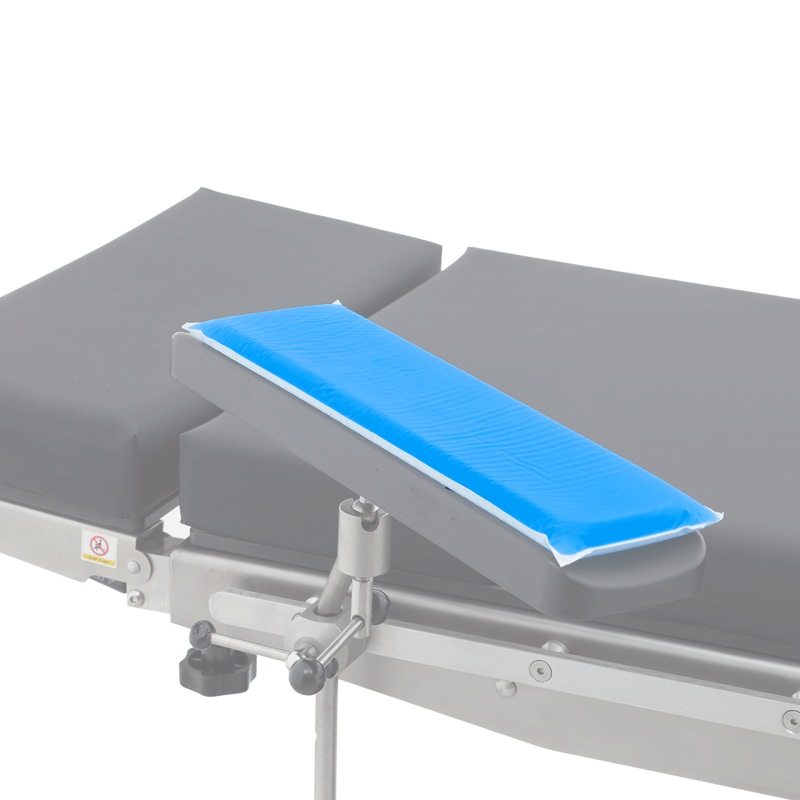
Gel Armrest Pad OT60.54
Prices visible to registered customers only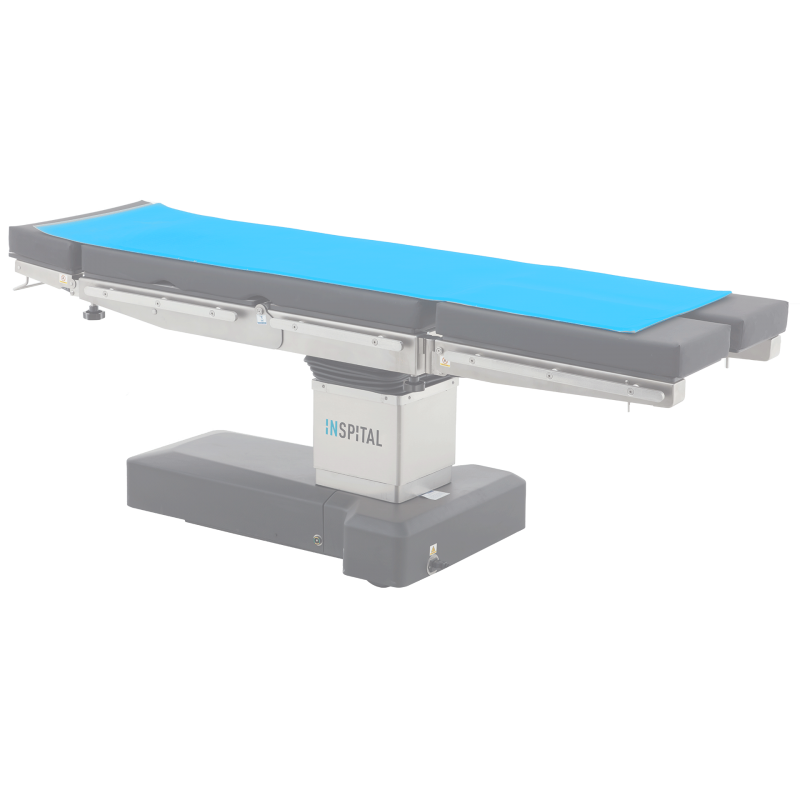
Gel surgical table pad, adult OT60.62
Prices visible to registered customers only
Gel Surgical Table Pad, Pediatric OT60.63
Prices visible to registered customers onlyThe importance of the gel OR table pad for patient safety in the operating room
In everyday OR practice, patient positioning is a key factor in the success of surgical procedures. Patients often remain in fixed positions for extended periods, which can promote pressure sores, circulatory problems, and muscle tension. Gel operating table pads, also sometimes referred to as heating mats, are specifically designed to counteract these risks. Products from Inspital GmbH, such as the OT60.62 and other models, offer a flexible solution that adapts to the contours of the body and effectively reduces pressure peaks.
The gel material ensures even weight distribution, relieving particularly sensitive areas such as the shoulder blades, heels, or sacrum. Clinical studies prove that the use of such pads significantly reduces the risk of pressure ulcers. At the same time, gel pads increase patient comfort by stabilizing the position and gently cushioning movements. In conjunction with air-conditioned operating rooms or optional heating, gel mats can also provide stable temperature compensation, which is why they are often incorrectly referred to as heating mats. Another advantage is their universal applicability. Inspital products can be used flexibly on various operating table models, whether in the supine, lateral, or Trendelenburg position. This facilitates surgery preparation, reduces the workload for OR staff, and minimizes additional positioning aids such as pillows or foam pads. At the same time, hygiene is guaranteed: the surfaces of the mats are resistant to disinfectants and easy to clean, making them ideal for sterile environments.
The combination of pressure relief, ergonomic adaptability, thermal stability, and hygienic design makes gel operating table pads an indispensable tool in the modern OR. They not only increase patient safety and comfort but also improve the workflow of the surgical team and efficiency in performing procedures.
Technological properties and functionality of gel operating table pads
Gel operating table pads are a combination of innovative material design, ergonomics, and functionality specifically developed for use in the OR. With models like the OT60.62, Inspital offers pads that can be used both as pressure relief aids and in combination with heated operating tables. They are designed to distribute weight evenly while increasing comfort for patients during lengthy procedures.
The heart of the gel mats is the highly flexible gel material that adapts to the contours of the body. Unlike conventional foam padding, gel absorbs point loads and distributes pressure over a larger area. This is particularly important for sensitive regions such as the shoulders, heels, iliac crest, or sacrum, which are exposed to heavy loads during long operations. Studies show that patients on gel pads develop fewer skin reddenings and pressure ulcers, which not only improves postoperative recovery but also reduces the number of necessary repositionings during surgery.
An additional advantage is the thermal property of the material. Gel stores heat well and can thus support a constant body temperature in combination with heated operating tables. This is the reason why gel pads are often referred to as “heating mats” in everyday OR life. A stable body temperature helps ensure that the effect of anesthesia remains consistent, the circulatory system works stably, and the waking phase after the procedure is shortened. Durability and stability are also decisive factors. Inspital products are designed to withstand frequent use, cleaning, and disinfection. The surfaces are smooth, seamless, and resistant to common disinfectants, ensuring the mats remain hygienically flawless. At the same time, they retain their dimensional stability, ensuring long-term pressure relief.
Additionally, the pads are characterized by universal application possibilities. They can be placed on a wide variety of operating table models and used in the supine, lateral, or Trendelenburg position. This significantly simplifies workflows for the OR team, as no complex additional positioning pillows are required. Combined with the benefits of pressure relief, thermal stability, and easy cleaning, gel operating table pads demonstrate that they are much more than just an aid—they are a central component for patient safety, comfort, and efficient OR processes.
Clinical benefits and patient advantages of gel operating table pads
Gel operating table pads, such as the OT60.62 from Inspital, offer numerous advantages in the operating room that go far beyond pure comfort. Their central function is pressure relief, which contributes decisively to the prevention of pressure ulcers. During surgical procedures, the patient often lies in a fixed position for hours. Without suitable positioning aids, point loads occur on the skin, muscles, and joints, which not only cause pain but can also impair blood circulation. This increases the risk of postoperative complications such as pressure ulcers or local tissue damage. Gel pads distribute body weight evenly over the entire contact surface, reducing the load on sensitive areas.
Another important aspect is comfort during long operations. Gel materials adapt to the contours of the body, absorb small movements, and reduce mechanical shear forces that could strain skin and muscles. This is of great importance, especially for patients with sensitive skin, elderly patients, or people with limited mobility. Studies have shown that patients on gel pads experience significantly less discomfort and postoperative complaints during long operations. Gel operating table pads also support the patient’s thermal stability. Many Inspital models, including the OT60.62, act like a heating mat because gel stores heat well and releases it evenly. In air-conditioned OR rooms, where the ambient temperature is often low, this helps to avoid hypothermia. A stable body temperature improves blood clotting, reduces the risk of hypothermia-related complications, and shortens the waking phase after anesthesia.
Furthermore, gel pads contribute to safety optimization during complex procedures. Since the material stabilizes the position, surgeons can work more precisely without patients slipping unintentionally. At the same time, the pad relieves the OR staff, as fewer manual adjustments are necessary. The easy handling and universal applicability make gel pads indispensable for both routine procedures and high-risk operations.
A decisive advantage also lies in the hygiene-friendliness. Inspital mats are easy to clean, resistant to disinfectants, and seamlessly processed, fully meeting the requirements for sterile OR environments. The combination of pressure relief, comfort, thermal stability, positioning safety, and hygiene makes gel operating table pads an integral part of modern operating rooms. They improve patient safety, reduce postoperative complications, and contribute to an efficient workflow for surgical procedures.
Hygiene standards, cleaning, and material quality of gel operating table pads
In operating rooms, hygiene is the top priority. The OT60.62 gel operating table pad from Inspital and other gel pads not only offer comfort and pressure relief but also meet the high requirements of modern hospitals regarding sterility and cleaning. The surfaces of the mats are seamless, smooth, and resistant to disinfectants, allowing them to be disinfected without problems between operations. This minimizes the risk of nosocomial infections and protects both patients and staff.
The gel material itself is characterized by robust durability and dimensional stability. Even with daily use over months or years, the pad retains its pressure-relieving effect and continues to adapt optimally to the patient’s contours. This clearly distinguishes gel pads from conventional foam padding, which gives way faster, becomes porous, or loses effectiveness under heavy use. As a result, clinics benefit long-term from lower replacement costs and a consistent safety standard for patient positioning.
A decisive advantage is the easy handling for the OR staff. The pads are easy to place on the table, remove, clean, and disinfect. Since the mats have no loose seams or joints, no germs can accumulate—a central point for compliance with hygiene standards. In addition, easy cleaning reduces the time between operations, which increases efficiency, especially in high-traffic OR departments.
In addition to hygiene, the material properties of the gel play an important role. Gel stores body heat and distributes pressure evenly over the contact surface, ensuring both comfort and safety. In developing the OT60.62, Inspital placed particular emphasis on the material being chemically resistant, durable, and skin-friendly. The combination of physical properties and hygienic surface structure ensures that patients are positioned not only safely but also comfortably.
Gel pads are also superior from the perspective of infection prevention. Their robust, disinfectable surface prevents the accumulation of bacteria, fungi, or viruses. This is particularly important in situations where several operations take place in succession or high-risk procedures are performed. The OR team can rely on the hygienic safety of the pad without having to take additional protective measures.
In summary, it is clear that gel operating table pads like the OT60.62 are more than just padding: they combine ergonomics, pressure relief, heat conduction, and hygiene in a durable, low-maintenance product. Hospitals thus receive a reliable, safe, and sustainable solution for patient positioning that supports both operative quality and the OR workflow.
Integration of gel pads into various OR positions and workflows
Gel operating table pads are not just comfort aids in modern operating rooms, but strategic positioning solutions that optimize the entire OR workflow. Products like the OT60.62 from Inspital can be used on almost all common operating table systems and support various patient positions: supine, lateral, Trendelenburg, or special positions for orthopedic and neurological procedures.
The universal applicability reduces the need for additional pillows or pads. This facilitates the preparation of the operating table, saves time, and ensures that patients are positioned stably and safely from the start. Gel pads stabilize the patient’s position and prevent slipping during surgery. For the OR team, this means fewer manual adjustments are necessary and surgeons can perform their procedures precisely without interruptions.
Another advantage of the OT60.62 is thermal stability. The gel pad stores heat and supports the patient’s body temperature, which is particularly important in air-conditioned rooms. In combination with heated operating tables or warming blankets, this can prevent hypothermia, ensure circulatory stability, and improve the waking phase after anesthesia.
Gel pads also offer flexible combinations with other positioning aids. For example, they can be combined with arm or leg holders, headrests, or shoulder pads without compromising pressure relief or stability. This makes them particularly suitable for complex procedures where patients must be positioned in special positions for hours.
Furthermore, the easy handling facilitates integration into standardized workflows. Mats can be quickly set up and taken down, cleaned, and reused. This reduces preparation time and minimizes sources of error, which increases both patient safety and efficiency in the OR.
Overall, it is clear that gel pads like the OT60.62 not only offer comfort but actively support operative processes: they ensure safe positioning, stabilize the position, protect the OR staff, and improve patient care in every phase of the procedure.
Clinical areas of application and advantages compared to foam padding
Gel operating table pads like the OT60.62 from Inspital are an indispensable tool in everyday modern OR life that goes far beyond comfort. While conventional foam padding only compensates for body contours to a limited extent and loses dimensional stability after long use, gel pads offer continuous adaptability and even pressure distribution. This is particularly relevant for sensitive body regions such as the shoulders, heels, sacrum, or gluteal region. Especially in operations lasting longer than two hours, inadequate positioning can lead to pressure ulcers, skin damage, or circulatory disorders. Gel pads significantly reduce this risk and contribute to postoperative recovery.
The areas of application for gel operating table pads are extremely versatile. They are suitable for supine, lateral, and Trendelenburg positions and are therefore indispensable in many surgical disciplines. Orthopedic operations, spinal procedures, abdominal surgical procedures, gynecological or urological operations benefit equally from stable and pressure-relieving positioning. For high-risk patients—such as elderly or weakened individuals—the use of gel pads is almost mandatory, as they protect skin integrity and reduce circulatory strain. Pediatric or bariatric patients also benefit from the even pressure distribution.
Another clinical advantage is the thermal effect. Gel stores heat and ensures even temperature distribution over the contact surface. This is particularly important in air-conditioned OR rooms where patients might otherwise cool down. Heat storage supports circulatory stability, prevents postoperative shivering, and can positively influence the waking phase after anesthesia. For this reason, gel pads are often referred to as “heating mats” in everyday OR life—even if their primary purpose is pressure relief.
Compared to foam padding, gel pads also offer higher durability and stability. While foam collapses or becomes porous over time, gel pads retain their shape and function for years. This saves costs for clinics and guarantees consistently high safety for patients.
Additionally, gel pads facilitate the work of the OR team. The easy-to-position, universal pad reduces the effort for corrections during surgery, minimizes additional positioning aids, and supports the ergonomic work of the staff. In the combination of pressure relief, thermal stability, hygiene, and durability, gel operating table pads like the OT60.62 show that they are much more than a comfort element—they are a central component for patient safety, operative efficiency, and clinical quality.
Selection criteria and purchasing considerations for gel operating table pads
The choice of a gel operating table pad is a strategic decision for any hospital that values patient safety, comfort, and operative efficiency. Several factors play a decisive role in the selection: material quality, pressure relief, thermal properties, hygiene, durability, flexibility in application, and compatibility with operating tables.
Material quality and pressure relief come first. Gel pads must adapt to the patient’s contours and ensure even pressure distribution to prevent the development of pressure ulcers. Inspital products like the OT60.62 meet these requirements because the gel is flexible yet dimensionally stable and reduces point pressure. Clinical experience shows that patients on such pads develop significantly fewer skin irritations and pressure damage than on classic foam padding.
Another central point is thermal functionality. Especially during longer operations or in air-conditioned rooms, it is important that patients are protected from hypothermia. Gel pads store heat and thus support circulatory stability, which can reduce postoperative complications. Products that combine thermal effects with pressure relief therefore offer a clear advantage over standard padding.
Hygiene and ease of cleaning are also crucial. Mats should be seamless, smooth, and resistant to disinfectants. Inspital mats are easy to clean, which increases readiness for use and facilitates compliance with sterility standards. Rapid cleaning reduces preparation time between operations and minimizes sources of error that can occur with more complex padding systems.
Flexibility and universal applicability are also important. Gel pads should be usable on different types of operating tables, in supine, lateral, or Trendelenburg positions. Easy handling facilitates positioning for the OR team, reduces physical effort, and ensures that patients remain stably and safely positioned.
Finally, durability and cost-effectiveness play a role. High-quality gel pads retain their shape and function for years, minimizing replacement costs. Inspital products meet these requirements and offer a sustainable, practical solution for hospitals of all sizes.
The decision for high-quality gel operating table pads is thus an investment in patient safety, operative efficiency, and long-term cost-effectiveness. They not only improve positioning but also directly affect the quality of surgical procedures and postoperative recovery. Clinics that rely on products like the OT60.62 benefit from a reliable, safe, and efficient positioning solution that meets all the requirements of modern operating rooms.