

Discovery of Pathogens

Share Article:
Ignaz Semmelweis (1818–1865) was a Hungarian physician who discovered that hand disinfection significantly reduced the risk of puerperal fever in maternity wards. Despite its success, his ideas were met with rejection and he was ridiculed. Only after his death did Louis Pasteur and Joseph Lister confirm the scientific basis of his discovery, and his practice gained worldwide recognition.

Contents

Medical situation in the 19th century

In 19th-century Europe, medicine was in a phase of fundamental upheaval. Hospitals were places of healing and, at the same time, death, as most infections were not yet understood. Puerperal fever in particular, a bacterial infection after childbirth, led to an alarming mortality rate in many urban clinics. Women often died a few days after delivery, and the causes were largely unknown. Doctors and midwives had no access to modern microbiological knowledge—terms like "bacteria" or "germs" were unknown, and the concepts of hygiene and sterility were still in their infancy. In this environment, Ignaz Philipp Semmelweis, a young Hungarian physician, began to systematically observe conditions in the clinic. He meticulously recorded mortality rates, patient profiles, examination methods, and ward procedures. This painstaking approach laid the foundation for one of the most significant medical discoveries of the 19th century.

Semmelweis’s observations and the introduction of hand disinfection

While working at the First Obstetrical Clinic of the Vienna General Hospital, Semmelweis noticed a striking pattern: mortality among patients cared for by doctors was significantly higher than among women cared for by midwives. After performing autopsies on the bodies of deceased patients, the doctors went directly to the maternity wards without cleaning their hands. Semmelweis concluded that "particulate matter" was being transmitted and causing the infections. To counteract this danger, he introduced hand disinfection with a chlorinated lime solution in 1847. Within a few months, the mortality rate dropped dramatically—from 18% to less than 1%. Semmelweis documented these results in detail and later published them in his book, "The Etiology, Concept, and Prophylaxis of Childbed Fever."

Resistance in the medical community

Despite the convincing figures, Semmelweis met with fierce resistance. Many of his colleagues rejected the idea that simple hand hygiene could save lives. On the one hand, his theory contradicted the established medical opinion of the time; on the other, doctors felt personally attacked. Semmelweis's suggestions were ridiculed, and he was unable to provide sufficient scientific evidence for his observations using the germ theory, which was still undeveloped at the time. This resistance led to increasing isolation and frustration. Tragically, his life ended in a psychiatric institution, where he died in 1865 from a wound infection that may have been caused by mistreatment. It was only years later that his observations were confirmed by the research of Louis Pasteur and Joseph Lister.

From the historical context to modern medicine

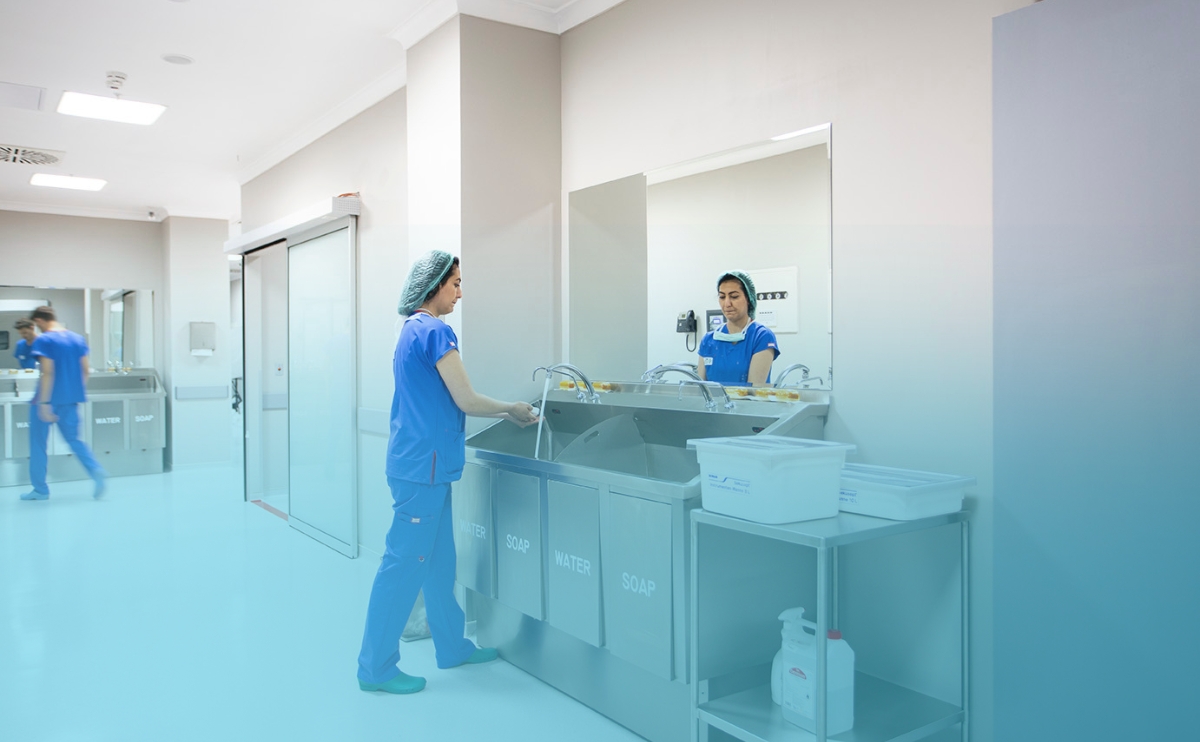
Semmelweis's work is of central importance to medicine today: it illustrates that infection prevention is not optional, but a matter of life and death. The principles Semmelweis developed—hand disinfection, sterilization of instruments, and systematic hygiene controls—still form the basis of modern clinical practice today. Clinics and care facilities worldwide follow these standards to protect patients and staff from infection.

Inspital: Implementing modern hygiene in practice

Today, Inspital puts these principles into practice. Our product range includes highly effective disinfectants for hands, surfaces, and instruments, sterilized medical instruments for surgery and diagnostics, and integrated hygiene systems for clinics and care facilities. These solutions make it possible to effectively reduce the risks of nosocomial infections and sustainably increase safety in everyday medical practice. Inspital combines the lessons of Semmelweis with state-of-the-art technology to support facilities in implementing the highest hygiene standards.

Current News

Academy

Here, everything revolves around knowledge and continuing education.

News Press

Here you will find current news about trade fairs, congresses, PR and other relevant topics.