Universal Operating Table at Inspital – Flexibility and Precision for the Modern Operating Room

Share Article:
The demands on modern operating rooms have fundamentally changed in recent years. Where specialized individual solutions for specific disciplines often dominated in the past, a concept focused on flexibility, efficiency, and multifunctionality is increasingly gaining ground today. Precisely in this context, Inspital’s universal operating table gains particular significance. It is not merely a medical device, but rather a central element of a dynamic OR infrastructure that must adapt to the diverse requirements of various surgical disciplines.

Contents

In clinics, especially in the DACH region, there is increasing pressure to use resources efficiently, shorten OR turnaround times, and simultaneously maintain the highest medical standards. In practice, this means that equipment must not only be powerful but also versatile and quickly reconfigurable. The universal operating table meets precisely these requirements by functioning as a platform that can be adapted to almost any surgical situation through modular extensions and precise control.

The increasing specialization in medicine also plays a paradoxical role. While surgical procedures are becoming more complex, the technical foundations in the OR must remain as universal as possible. Inspital recognized this need early on and develops operating table systems that are not limited to a single specialty but enable broad clinical application – from general surgery and orthopedics to highly specialized interventions.

Technology that Makes the Difference: Structure and Function of Certified Operating Tables

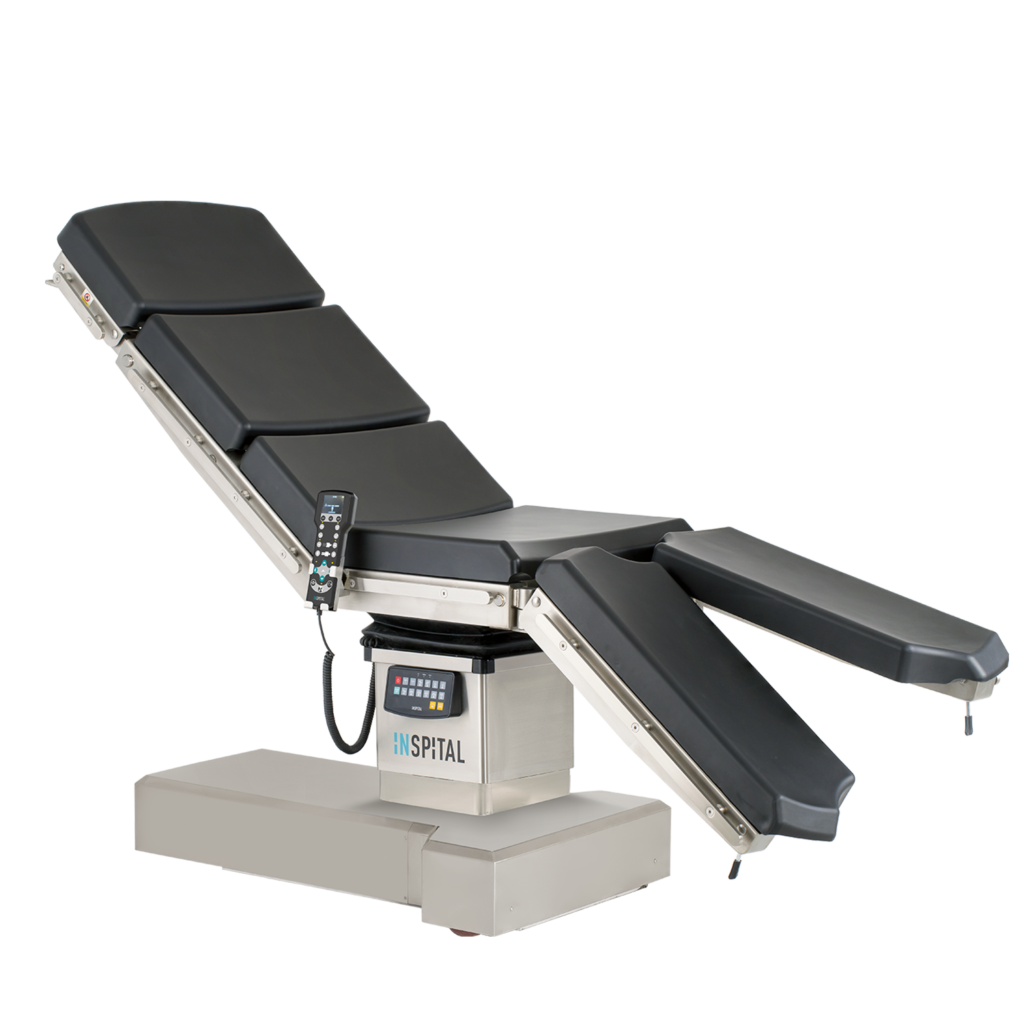
The technical basis of Inspital's universal operating tables is designed for durability, precision, and stability. Models such as the OT80.20 or OT80.25 impressively demonstrate how mechanical robustness and modern control technology can be combined to meet the demands of a highly dynamic OR routine.

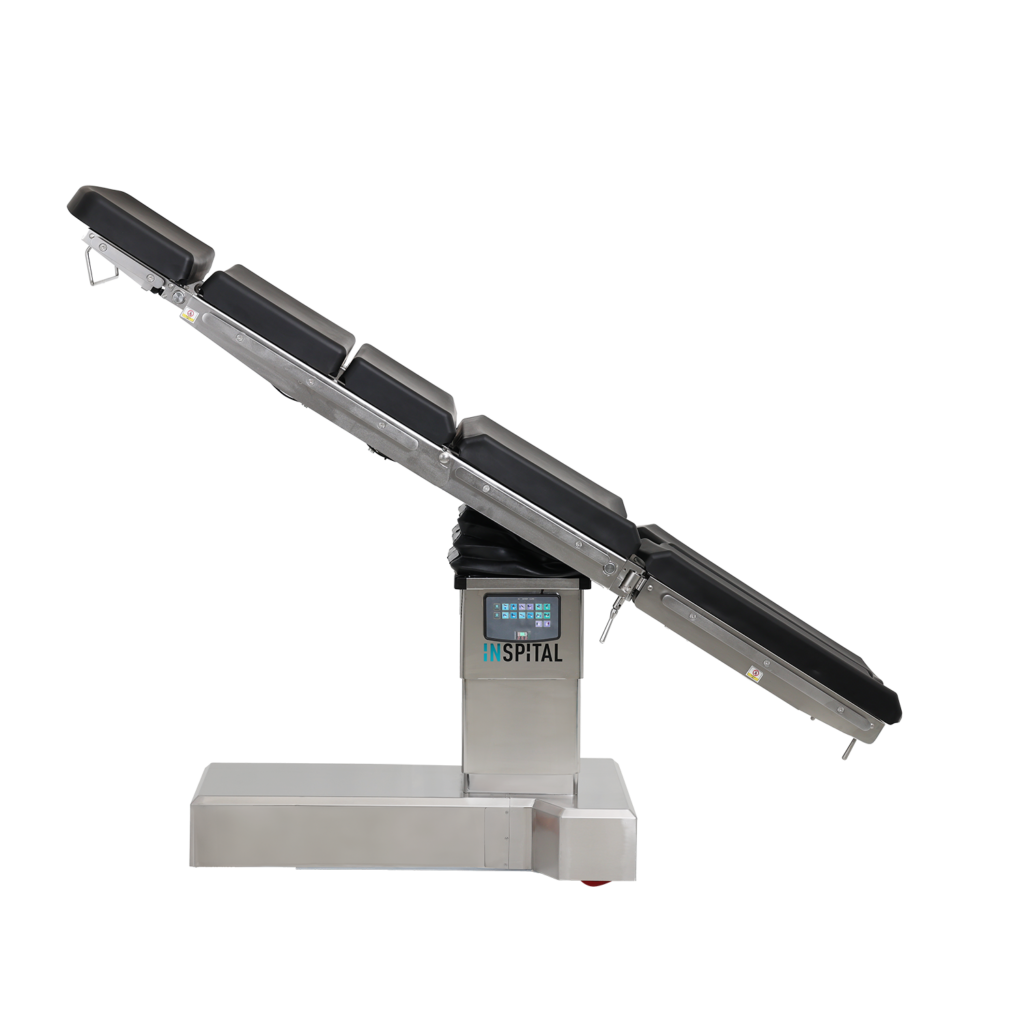
At its core is an electro-hydraulic drive system that enables the finest positional changes. Height adjustments, lateral tilts, or Trendelenburg positions can be precisely and continuously controlled, allowing the surgical team to create optimal conditions for the respective procedure at all times. Particularly noteworthy is the longitudinal shift of the tabletop, which, depending on the model, extends several hundred millimeters, thus enabling ideal adaptation to imaging procedures such as C-arm or X-ray examinations.

The construction itself is based on a stable stainless steel frame combined with a heavy T-base, which ensures maximum stability – even during demanding surgical positioning. At the same time, an integrated battery unit ensures that the table functions reliably even independently of the power grid. This feature is particularly crucial in emergency situations, as OR operations can continue without interruption.

What particularly distinguishes these systems, however, is not only their technical performance but also the way they can be integrated into clinical everyday life. Inspital pursues an approach where technology is not viewed in isolation but as part of an overall system that seamlessly integrates into existing OR structures.

Modularity as a Concept: How One Table Replaces Many Specialized Solutions

One of the greatest advances in the development of modern operating tables lies in the consistent implementation of modular systems. Inspital's universal operating table is built precisely on this principle: instead of maintaining several specialized tables for different procedures, a single system is used that can be flexibly expanded and reconfigured.

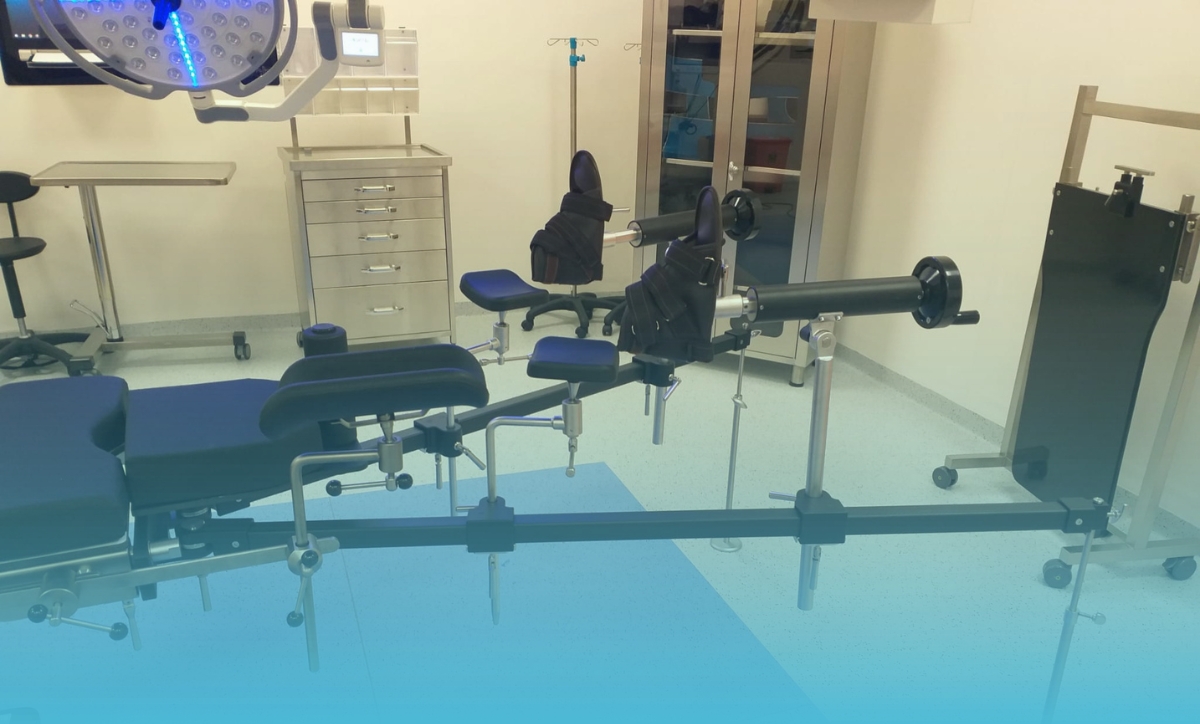
The tabletops consist of individual segments that can be adapted or replaced depending on surgical needs. This flexibility allows for a quick change from an orthopedic setup with extension devices to a neurosurgical setup with special head and positioning technology. Suitable components can also be integrated for minimally invasive procedures or image-guided procedures, such as radiolucent carbon elements that enable clear imaging without disturbing artifacts. In addition, there is an extensive accessory system, ranging from leg holders and shoulder supports to complex fixation systems. These components are designed to be intuitively assembled and not delay the OR process. Especially in busy clinics, this time factor is crucial, as every change between procedures must be managed efficiently.

The real advantage of this modular approach, however, lies not only in flexibility but also in economic efficiency. Clinics can reduce investment costs by using a universal system and at the same time significantly increase the utilization of their equipment. This makes the operating table a long-term strategic investment rather than a purely functional acquisition.

Hygiene, Safety, and Clinical Reality in Everyday OR Life

In the operating environment, hygiene is not an additional criterion but an absolute prerequisite. Every aspect of the technical equipment must be designed to minimize infection risks and enable quick, effective cleaning. This is precisely where Inspital's universal operating tables show their strength, as they were specifically developed for these requirements.

The surfaces are designed to be smooth, resistant, and durable against common disinfectants. This allows them to be cleaned quickly and thoroughly without material wear or surface damage. The modular design also contributes to hygiene, as components can be individually removed and cleaned separately, largely avoiding hard-to-reach areas. In addition to hygiene, patient safety plays a central role. The operating tables are equipped with ergonomic padding that allows for stable and pressure-relieving positioning. This is particularly important for longer procedures to prevent pressure sores or positioning injuries.

Another decisive factor is the high load capacity of the systems. With capacities of over 400 kilograms, they are designed for a wide range of patients and offer maximum stability even during complex or long-lasting operations. This is complemented by international certifications that ensure the systems comply with current medical standards and can be used in clinics worldwide.

Clinical Applications: One System for Many Disciplines

Inspital's universal operating table particularly demonstrates its strengths where different surgical specialties collaborate under one roof. In modern hospitals, it is long common for an operating room not to be reserved for a single discipline but to be flexibly used for various procedures. It is precisely in this environment that the advantage of a universally applicable system becomes apparent.

In general surgery, the table enables stable yet flexibly adaptable positioning suitable for a variety of procedures. In orthopedics, special extension systems are additionally used, allowing for precise positioning of extremities. For neurosurgical procedures, however, highly precise headrests and stable fixation systems are crucial to ensure maximum accuracy during the intervention. In gynecology and urology, flexibility also plays a central role, as different positioning requirements are often needed within a short time. The universal operating table makes it possible to meet these requirements without time-consuming reconfigurations. Furthermore, the system is also gaining importance in emergency and trauma care. The quick adjustability and robust construction make it possible to prepare patients immediately and safely for surgical interventions – a decisive advantage in time-critical situations.

Conclusion: Why Inspital's Universal Operating Table is a Forward-Looking Concept

Inspital's universal operating table exemplifies the development of modern medical technology towards flexible, modular, and economically efficient overall systems. Instead of isolated individual solutions, it offers a platform that adapts to the requirements of various surgical disciplines while meeting the highest technical and hygienic standards. The added value of this approach is particularly evident in clinical everyday life: faster processes, reduced changeover times, lower investment costs, and significantly higher utilization of the OR infrastructure. Thus, the operating table becomes not just a functional tool but a strategic component of modern hospital planning. Inspital succeeds in combining technological precision with practical applicability – a decisive factor in a time when efficiency and quality are equally demanded in healthcare. The universal operating table is therefore not only a current solution but a clear step towards the OR infrastructure of the future.

Current News

Academy

Here, everything revolves around knowledge and continuing education.

News Press

Here you will find current news about trade fairs, congresses, PR and other relevant topics.